Monday, 1 October 2018

Heightening protection for Java's mountain wildlife

Posted by Stu & Christian Devenish

It is more than three years since Nigel Collar and I first discussed the need for extensive surveys of birds and other key endemic taxa across a whole range of mountains in West and Central Java. All of these mountains, including ones such as Gede-Pangrango which are well-known to many birders, are understudied, some have not been visited by biologists for half a century. This is a knowledge gap that needed to be filled quickly – the mountains are packed with Javan endemics; forest loss on most mountains has been significant, especially on their lower slopes; and heavy trapping for the cagebird trade has brought about reportedly precipitous declines in species such as Javan Green Magpie and Rufous-fronted Laughingthrush. 


Above - montane forest on Gunung Slamet; Below - the bird market at Purwokerto, Central Java (Photos: Gabby Salazar www.gabbysalazar.com)

Our recent review of ‘the state’ of West Java’s mountains including analysis of forest cover change (Higginbottom et al. in press), funded by the Shearwater Foundation, highlighted a series of around 20 mountains/blocks, all needing biological and socio-economic surveys fast. Coupled with this was a need and a desire by Indonesia’s Environment Ministry to consider expanding their protected area network in upland Java to better protect the country’s key species.


Maps showing the locations of mountains we intend to survey, and forest cover and loss since 1990 (from Higginbottom et al. in press)
A finding of our ‘Shearwater’ work was that forest inside of protected areas has indeed fared better than that outside of formal protection. This brought the project to the attention of Rainforest Trust, an NGO/Not for Profit which aims, through increasingly imaginative means, to expand the world’s protected area coverage. Finally, after much huffing and puffing, we are there – a four year project coordinated by Burung Indonesia, the BirdLife partner in Indonesia, which aims to identify priority areas for conservation in the Javan uplands – ones which have important populations of key species and habitats and the conditions under which these can be protected into the future – and to take one or more of these areas right through to designation as official protected areas.

Project preparations in the Burung office in Bogor with L>R Rick Stanley, Christian Devenish, Ria Saryanthi, Ridha Junaid & Stuart Marsden (Photo: Gabby Salazar www.gabbysalazar.com).
One of the first steps in this pipeline to protection is to conduct socio-economic studies in and around the candidate mountains, and to survey as well as we can the wildlife they contain. With up to 20 mountains to cover, this is no mean feat. We need to find out how local communities use the forest and perceive its value and how this might change under protection. We also want to know about patterns of bird trapping and which areas might serve as sanctuaries or release sites for threatened birds in the future. Not least we need to know which species from a range of taxonomic groups survive on which mountains, where they occur and in what kind of numbers in which habitats. We certainly cannot survey everything everywhere – so the choice of taxa, locations and methods have taken a great deal of thought. 
Capacity building in action. Above - Ridha (far right) joined our bird surveying workshop in Bogor as a student a couple of years ago. Below - Ridha talking birds with local students as a researcher on the Rainforest Trust project.


Finally, we have plumped for a system of week-long surveys at multiple sites within mountains. We have also decided on a fusion of controlled and relatively high tech surveys using remote cameras and acoustic recorders arranged along transects, and more extensive ‘quick and dirty’ encounter rate searches for key species. Records from the latter may feed into spatial distributional analyses (such as ENFAs) which will help to identify hotspots for protection at the local level. Key groups we are focusing on are birds of course, ground-dwelling mammals and primates such as Javan Gibbon, and selected amphibians.
 

Above - The fieldwork is quite tech-heavy compared to our usual projects. Below - We will be surveying remotely and actively birds, mammals and amphibians (Photos: Gabby Salazar www.gabbysalazar.com)


Our first survey has just started on Gunung Slamet in Central Java, the most easterly of our mountains and one that has special significance on account of its large size and relatively isolated position. With additional funding from our friends at Chester Zoo, we have around six weeks on various parts of the mountain. We have a team of 8-10  in the field comprising Ridha Junaid and a researcher from Burung Indonesia, Rick Stanley and Gabby Salazar, experienced PhD students/wildlife recorders from USA, two students from the local university (capacity building is a key component of the project), and Pak Karso and his excellent team of local guides. Periodically, they will be joined by Bas van Balen, Christian, myself and a whole series of other people over the next 18 months as they move from mountain to mountain. 


Friday, 1 June 2018

Chaona Phiri and the Black-cheeked Lovebird

Posted by Chaona Phiri

In June of 2017, my boss Trevor Robson returned from a visit to the BirdLife International Secretariat in Cambridge very excited about a chat he had with Nigel Collar. They apparently discussed me and the work I was doing on birds in Zambia. One of those species is the Black-cheeked Lovebird Agapornis nigrigenis a localized parrot restricted to the deciduous Mopane woodlands of South western Zambia.


The Vulnerable  Black-cheeked Lovebird Agapornis nigrigenis (Photo: Chao)
My name is Chaona Phiri and I work as an ecologist at BirdWatch Zambia (BWZ), BirdLife International’s partner in Zambia. I have been with BWZ for close to 10 years, having joined them as a student intern in 2008. So, Trevor mentioned that Nigel Collar was interested in having a student in Zambia to work on the Black-cheeked Lovebird (BCL); its now near endemic to Zambia as there have been some local extinctions in wild populations of Namibia, Botswana and Zimbabwe. I was apparently the preferred student since I had already done some work on these species and working for the BirdLife partner in Zambia.


Chao and Birdwatch Zambia team counting birds
By the end of 2017, I had not only been talking to Nigel but had also been introduced to Stu Marsden and Christian Devenish who have since been helping with fundraising and designing what exactly we will do on the BCL project. With funding from the Loro Parque Fundacion, I will will undertake a part-time doctoral research programme over a projected five-year period at Manchester Metropolitan University. Part-time because I will be based in Zambia and still working for the BWZ.

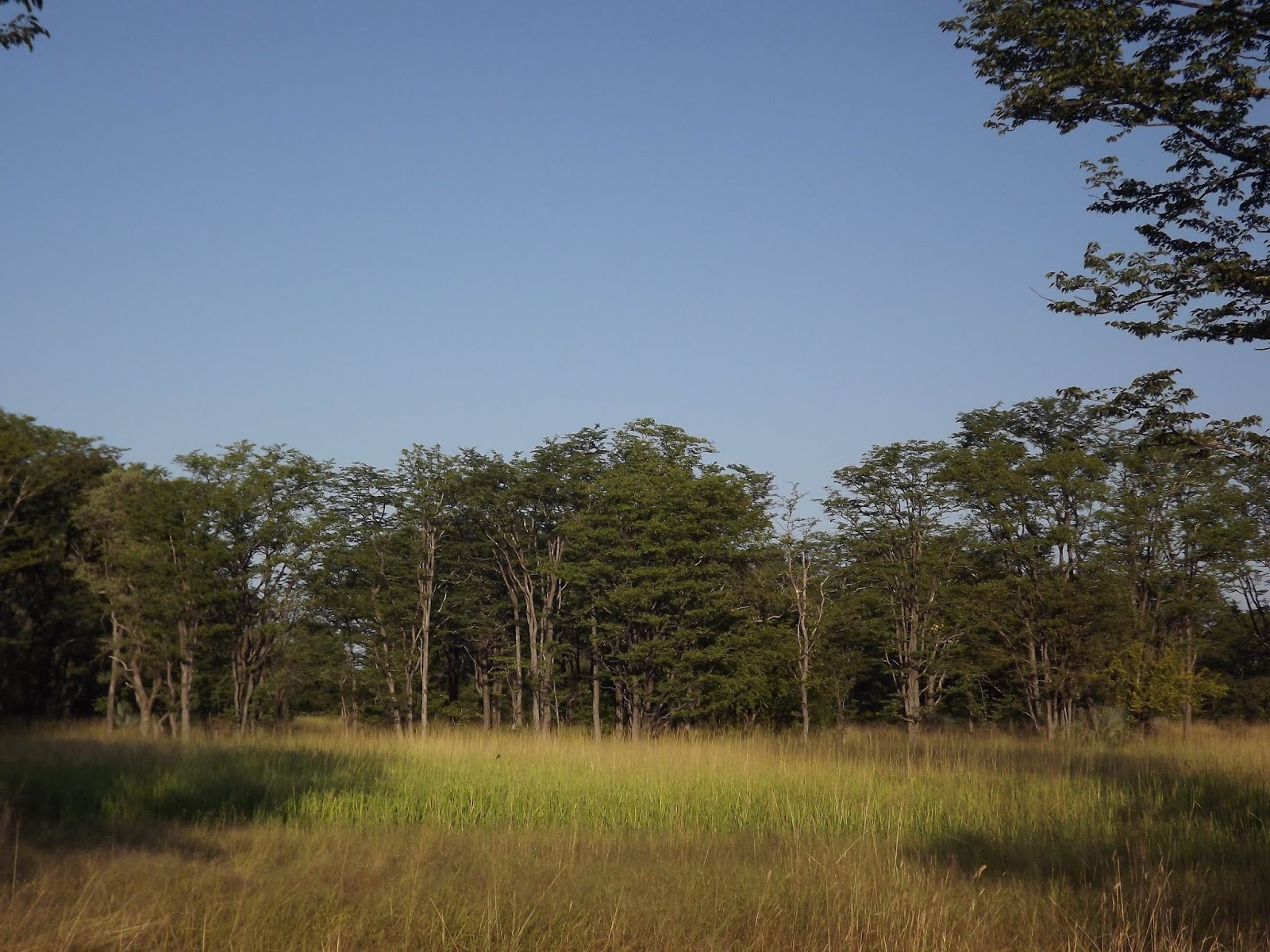
Above: Zambia's Mopane woodland on which the lovebird seems to rely; Below: large Mopane tree turned into a canoe in situ (Photos: Chao)


 Presently, this Lovebird is thought to be Africa’s most localised parrot species with a restricted range of around 5500 sq. km. Within its restricted range, the species is clumped and localised to stands of mopane with large trees and permanent water sources. The naturally formed cavities in live mature Mopane trees are A. nigrigenis’ choice of roosting sites; these double as nesting sites during the breeding season. The roost site location is stable for as long as a site remains intact and undisturbed. This makes the bird extremely vulnerable to land-use/habitat change within its range, especially the with increased cutting of large mopane trees for firewood and timber, as well as agriculture expansion for Maize, Sorghum and Millet which have replaced a large section of the woodland habitats. 

Flooded Mopane - water sources may be key to the bird's survival especially in the dry season (Photo: Chao)
 However, perhaps the most important influence on the species has been the fall in surface-water availability over the last 25 years – as a result of both changing climate and patterns of water usage in the region. A significant reduction in surface water sources has been recorded in much of south western Zambia in light of several factors including but not limited to; low annual rainfall (shorter rain season), human population growth and increase in livestock farming. 
Above: An objective of the PhD is to find out how limiting drinking opportunities are for the lovebird; Below: Waterholes are clearly multi-use - a challenge is to find a way that people and lovebirds can co-habit (Photos: Chao)

The primary aim of this project is to improve significantly our level of knowledge of (and hence our capacity to counteract) the factors that currently limit the global population of the Black-cheeked Lovebird (BCL). At the same time, an important secondary aim of the project is to provide a strong ecological training for me, young bird conservationist in Zambia, as a long-term investment in both BWZ and the protection and survival of the lovebird. To achieve both aims, the project will take the following objectives:

1. To assess and establish the species range, abundance and population using point and transect count methods.
 

2. To document the state of the species habitat and its associations as well as possible local perceptions regarding the species and their impacts on its distribution and abundance.
 

3. To identify and monitor a series of waterbodies that are used and unused by BCL using citizen science and remote sensing.
 

4. To use historical and current presence records (e.g. from 1.) to build species distribution models (SDMs) for BCL to determine the influence of landscape features, habitat and waterbody location on its distribution.
 

5. To prescribe management strategies using SDMs of future scenarios regarding water availability and suitable habitat.


It's rare to see our three Loro Parque Fundación parrot PhDers in the same room. L>R Anna Reuleaux (Yellow-crested Cockatoo), Andrea Thomen (Hispaniolan parrots) & Chaona Phiri (Photo: Fraser Combe)

Saturday, 12 May 2018

Worrying news on Timneh Parrots from Gola


Posted by Simon Valle & Stuart Marsden

The Timneh Parrot (Psittacus timneh) together with the congeneric Grey Parrot (Psittacus erithacus) has recently been uplisted, to Endangered based on the suspected decline due to habitat loss and trapping for the pet trade (BirdLife International 2018). However, the hard truth is that we have hardly any data on the size and trends of the populations that dwell in the remaining forest patches across its range. As part of a project generously funded by the Parrot Wildlife Foundation, successfully launched inaugurated with a productive workshop at the Gola Rainforest National Park (GRNP), Dr Simon Valle (Bangor University) has spent four weeks surveying in and around GRNP to understand how abundant the species may be. 

Community guide Mohamed Nyallay (left) and porters Mustapha Kanneh (centre) and Keni Desmond on their way to set a base camp in the heart of Gola Rainforest National Park (Photo: S. Valle)

Preliminary results from the surveys have raised some serious concerns for the species in Gola, despite being probably one of the best preserved and managed protected areas in West Africa. Simon and his team often struggled to find any parrots even in the better-preserved forest at the core of the national park. Encounters were rare and far apart and judging from the extremely low encounter rates (0.3 parrots/hour), and, until the analysis is done, we can only assume that Timneh Parrots presumably persist at very low densities in the area as a whole. These figures are alarming if we compare them to those of healthy populations of the congeneric Grey Parrot such as the 30 ± 8 parrots per sq km in Lobéké National Park, Cameroun (Marsden et al. 2015), or the 59 ± 4 parrots  per sq km on the Island of Príncipe, São Tomé & Príncipe (Valle et al. 2017). 


A rare encounter in Gola forest. 
Community Guide Mohamed Mansare` listens to a 
group of Timneh Parrots feeding on a nearby tree.


Most encounters were from the 4-km buffer zone that surrounds the park, where the forest is under continuous threat from inhabitants of the surrounding settlements. The buffer zone holds pockets of reasonably intact forest and hosts some very successful wildlife -friendly cocoa farms managed in partnership with the park authorities. However, in some areas, the buffer zone still bears the clear signs of slash-and-burn farming, selective logging for valuable timber and mining for gold and diamonds. These are the areas where the work of the park authorities is the most difficult and the survival of the remaining forest most fragile.


A team surveys for Timneh Parrots in the 4-km buffer zone around the Gola Rainforest National Park, where large areas are cleared with fire to make space for subsistence farming (Photo: S. Valle)


The data collected in GRNP are an important alarm bell and shows us that a well-protected and carefully managed protected area may not be sufficient to guarantee the recovery of a population to a healthy state, or at least not before many years (Valle et al. 2018). Moreover, these results highlight the importance of performing similar surveys across the range to assess the true conservation status of this species and the need for consistent monitoring of the remaining populations. With this in mind, and following up on the successful training held in GRNP, Simon has delivered a further workshop at the HQ of the National Protected Areas Authority, the government agency which manages all protected areas across the country. Together with Prof Stuart Marsden (Manchester Metropolitan University), Simon will keep on working closely with the NPAA and GRNP to develop a long-term countrywide monitoring scheme for Timneh Parrot, probably the first of its kind in Africa.

References

BirdLife International (2018) Species factsheet: Psittacus timneh. Downloaded from http://www.birdlife.org on 12/05/2018
Marsden, S.J., Loqueh, E., Takuo, J.M., Hart, J.A., Abani, R., Ahon, D.B., Annorbah, N.N.D., Johnson, R., & Valle, S. (2015) Using encounter rates as surrogates for density estimates makes monitoring of the heavily-traded grey parrots achievable across Africa. Oryx 50(4):617-625
Valle, S., Collar, N.J., Harris, E., & Marsden, S.J. (2017) Spatial and seasonal variation in abundance within an insular grey parrot population. African Journal of Ecology 55(4):433-442
Valle, S., Collar, N.J., Harris, E., & Marsden, S.J. (2018) Effects of trapping method and capture rate variability on harvest sustainability in a heavily traded parrot. Biological Conservation 217:428–436


Saturday, 31 March 2018

Spotlight on Timneh Parrot

 Posted by Stu, Simon Valle & Amy Marsden

Ever since Simon Valle (now Bangor University) and Nat Annorbah finished their PhDs on Grey Parrots here at MMU, we’ve been itching to start more work on this stunning but troubled taxon. The opportunity arrived in the form of a grant from the newly formed Parrot Wildlife Foundation See their website, a French charity dedicated to parrot welfare and conservation run by Eric Vignot. Stu had spent a very pleasant week in early March with Eric and Irina in Dominican Republic, kicking off Andrea Thomen’s PhD on parrots on that island. Now it was time for something a little tougher.

Above - Simon talking about Timneh's range (Photo: Amy); Below - Stu introducing the science behind the simple encounter rate method (Photo: Simon)


There are two main components to the project – a workshop on Timneh Parrot monitoring and a survey of the parrot across the Gola Rainforest National Park (GRNP). This post describes the former and some thoughts on how Timneh Parrots can be monitored effectively but practically long term across their range. 


Relaxing after practicing fieldwork in Gola
The three-day course took place at GRNP’s research station/guest lodge in Lalehun. The attendees for the workshop represented a number of institutions and organisations working within conservation in Sierra Leone - the Conservation Society of Sierra Leone (CSSL), National Protected Area Authority (NPAA), students and lecturers from Njala University and Eastern Polytechnic, and staff from the Gola Rainforest itself. Mustapha Songe, a tour guide from a community on the border of the National Park, also attended. The aim was to introduce delegates to the ecology and plight of the Timneh, train them in a simple method to monitor parrots that can be done whilst conducting their usual duties, and to discuss ways in which a scheme to monitor Timnehs could possibly be rolled out across Sierra Leone.


Lovely t-shirts and other course materials - thanks to Bearprint Design, TinnedSnail, and Amy Marsden (Photos: Amy)
The method itself centres on a paper we published in Oryx in 2015 – we identified the relationship between grey parrot abundance as estimated using Distance sampling and an ‘on-the-hoof’ encounter rate method (simply the number of parrot groups seen or heard per hour of walking or sitting). The course included plenty of field practice and discussion, especially feedback on how the method could be tailored for the local situation. We were all delighted with both the level of interest and understanding (many participants had little or no biological training), and the enthusiasm for taking forward a countrywide parrot monitoring scheme. Certainly, Timneh Parrot monitoring is on the agenda for Gola, and we hope elsewhere too. Simon will be visiting NPAA in Freetown to discuss possibilities in other protected areas.


The course is only the beginning of our work at Gola. Simon is starting five weeks of fieldwork right across the National Park to estimate abundance and habitat needs of the species. The first step on this exciting journey was to check out reports of a large parrot roost in a community forest close to Gola with Patrick Dauda of the park’s Research & Monitoring Department. We were unable to see parrots at what seems to be a ‘flexible’ roosting area, but hope that Simon and Patrick will be able to return to the site to check on numbers of parrots in the area.


Checking potential roosting tree in one of the community forests on the border of the Nartional Park (Photo: Amy)

We thank: Alusine Kpara, Sheriff Mohamed V, Mustapha Dabenie, Ahmed M Swaray, Amara Aruma, Ibraihim J Kallon (GRNP); Momoh Bai Sesay, Mohamed Sama (CSSL); Osman Deen, Alhassan Khalli Kamara, Abdul Karim Sesay, Wuyatta Kallon (NPAA); Bobson Kobba (Njala University), James Feika (Eastern Polytechnic); and Mustapha Songe (Community tour guide) for interesting discussions during the course. Special thanks go to Benjamin Barca, Brima Sheku Turay, and Patrick Dauda of Gola Rainforest National Park for their amazing support and help with logistics. The project is funded by Parrot Wildlife Foundation.


Tuesday, 16 January 2018

The trapping of adult grey parrots is ruinous

Posted by Simon Valle & Stu

In a paper just published in Biological Conservation, Simon Valle et al. investigated how different capture methods and other aspects of parrot trade, other than just the actual volume of birds taken from the wild, can affect sustainability of harvest. This is of course important as the ‘currency’ which is generally used by CITES and government agencies to assess the impact of bird trade is usually solely the total number taken from the wild. This paper shows how crucial it is to also consider other facets of the trade – if adults or nestlings are taken, how may fluctuations in annual harvest affect sustainability, and what role may habitat loss or augmentation have in influencing population stability. 


The study was grounded in the building of a population viability model (PVA), a tool often used in conservation biology to see how populations might grow or decline in the future. These models use demographic parameters such as birth rates, mortality of juveniles and adults, longevity, and other life history traits to predict future population trajectories and to identify those aspects of the animals’ lives that are most crucial to safeguard. PVAs are data-hungry, and the lack of real data from wild populations means that, often, parameters have to be taken from other species, from captive birds, or are simply guessed. Our models used some data (e.g. on mortality) from other large parrot species, but Simon’s months of fieldwork on the grey parrot (Psittacus erithacus) population on Príncipe meant that we had a reasonable idea of most of the parameters needed for the running of the models.

Inquisitive subadult grey parrot kept as a pet on the island of Príncipe.This individual would have been originally caught as a chick from the nest, as is common  practice on the island .

Our first important finding was that there was a very fine line between a harvest being sustainable in the long term, and ruinous. A harvest of around 900 individuals per year allowed the population to thrive, but one of 1000 birds almost certainly resulted in extinction of grey parrots on the island. Hence, to keep trade sustainable, we would need to relying on a scientific balancing act, but this is the polar opposite of how grey parrot trade is currently managed – we have little or no confidence that quotas are strictly adhered to, mortality in trade is pitiful and unknown, and often we don’t even know from which country the parrots were even caught.     

Predicted population trajectories in response to no harvest (0% of the initial population); and annual harvests (SD) of 600 (100), i.e. 7.5% of the initial population, 900 (100), and 1200 (100) chicks, i.e. 15% of the initial population. Light grey lines =population trajectories resulting from each simulation; black solid lines = mean trajectory.

Even more disturbing is that the age of birds taken from the wild blows simple numbers of birds taken out of the water in terms of its importance. On Principe, there was a tradition of only taking chicks from nests, and leaving the adults to be. This is likely one of the keys to the species’ survival in large numbers on the island. The figure below shows how disastrous the taking of just a few adults can be. The taking of birds ‘randomly’ from the population, as might be done in places like Cameroon where birds are caught en mass at aggregations, is utterly ruinous.


Difference in predicted 50-year trends when the population is subject to a harvest of 900 ± 100 harvesting chicks only, nest raiding (i.e. one adult is collected with every two chicks) and indiscriminate trapping.

Another interesting finding of the study was that having a ‘steady’ (well-managed and well-policed) harvest of small numbers of birds every year is more likely to be sustainable in the long term than a harvest that is inconsistent across years. The message here is that booms and busts of parrot trapping are not a good thing.  

Predicted population trend and individual simulations in response to harvesting a fixed (left) or variable (right) quota of 900 (top) and of 1000 (bottom) chicks each year

But booms and busts, high and variable mortality and other real uncertainties are exactly the realities that have plagued the trade in grey parrots for the past decades. Effective trade management seems a million miles away from what is happening at present across the species’ range.

On Príncipe grey parrots are commonly raised together with other household pets.

The research on the Grey Parrots in Príncipe was funded by


and supported by


Wednesday, 27 December 2017

Using acoustic monitoring to understand human impacts on Amazonian wildlife

Posted by Oliver Metcalf

It was dawn on my first morning in the Amazon. 24 hours earlier, I had been walking through the snow in Manchester to catch a bus to the airport, now I was stood 50m up on a scaffolding tower, soaring above the rain forest canopy, listening to the forest come alive. We had been so keen to get here that we hadn’t slept, briefly dropped our bags at the accommodation and then headed straight out on dirt roads, so that my first sight of Brazil should be deep in the heart of pristine rain forest. Moments earlier, there had only been the occasional mournful whistle of a tinamou and the otherworldly, nightmare-ish growl of howler monkeys, but now the dawn chorus had started and songs and calls came from all directions.
The Tapajos National Forest at dawn – the sun glowing red from the smoke of surrounding small wildfires (Photo: Oliver Metcalf)

Alex Lees, my PhD Director of Studies, rattled off the species names like a football commentator during a particularly frenzied passage of play, recording each species on eBird as he pointed them out – cryptic forest-falcon, black-tailed trogon, rufous-winged antwren, three-striped flycatcher - before long my head was spinning and I couldn’t keep up. Zoning out of trying to identify individual species, I took a minute to feel this new environment, to indulge the surreal feeling of being so far from home, in the world’s greatest rain forest. But something jarred with the image my eyes were providing of pristine wilderness, there in the background of sensory overload was the acrid, lingering smell of smoke. 

Above: Undisturbed forest looks dark because of an intact canopy layer. Below: Burned forest lets in more light as dying trees open up gaps in the canopy. Many species in the Amazon are photophobic and won't cope well with these brighter conditions (Photos: Oliver Metcalf)

The ecological and environmental impact of deforestation in the Amazon are well known and well publicised. Many of us have watched news reports of falling canopy giants accompanied by the soundtrack of screaming chainsaws, or learnt in geography classes about the harm slash-and-burn agriculture can cause. However, the high visibility of this environmental destruction has led to the Brazilian government taking action, and the rate of deforestation has declined since their 2004 peak (albeit with some recent increases). Various sustainable forestry initiatives have been used to slow the rate of deforestation– including extractive reserves which permit selective logging. These allow large areas to be set aside ostensibly for conservation purposes whilst still generating income from extractive industries.


Delights and dangers of Amazonian fieldwork. Above, the lovely Wing-barred Piprites Piprites chloris (Photo: Nárgila Moura); Below, a Fer-de-lance Bothrops atrox sharing the trail with us (Photo: Oliver Metcalf)


Large swathes of Amazonia are now subject to disturbance from selective logging and fire, yet our understanding of the impacts of such disturbance on biodiversity is still limited (Barlow et al., 2016). One of the most harmful consequences of selective logging is an increase in forest susceptibility to wildfire, exacerbating an already volatile situation caused by drought and climate change. In fact, during the El Nino events of 2015-2016, there were so many wildfires in the Santarem region (where my study site is located), the area was responsible for driving a large rise in atmospheric carbon dioxide levels. Fire can have devastating and immediate impacts on tropical forests. During my PhD, I will be working with the Sustainable Amazon Network, a transdisciplinary research consortium that studies the effects of disturbance on all levels of the rain forest environment and its biodiversity, as well as the best means to avoid and mitigate these impacts. I will be working in a protected area that allows selective logging, the Tapajos National Forest (FLONA) in Para state, Brazil, to establish the impact of logging and fire on the biodiversity of the park, large areas inside and outside of the reserve were burnt in 2015-2016. Consequently, my study design will focus on establishing the impacts of disturbance on biodiversity across a degradation gradient – comparing areas that are variously undisturbed, logged, burned or logged and burned.

Layard's Woodcreeper Lepidocolaptes layardi (Photo: Alex Lees)
Technical innovations in measuring biodiversity in the rain forest

Of course, comparing ‘biodiversity’ in such a diverse and challenging region is easier said than done. Trekking from point count to point count, transect to transect can be extremely hard work, time consuming and even dangerous, with a preponderance of poisonous snakes, bullet ants and wasps. Even if everything goes to plan, observing wildlife can be extremely difficult, frogs hide in hollow logs, birds feed in canopies 50m above and mammals run for cover well before a surveyor can clap eyes on them. This means that the best way to survey a wide range of species in the Amazon is to listen for the sounds they make. Even then, some species will only call at dawn and dusk–particularly birds such as forest falcons and tinamous, whilst others will wait for the dead of night or the heat of the day before making noise. This means that any attempt to survey all species using point counts or transects will inevitably miss a range of species, unless repeated a huge number of times across the day.

Some of the wildlife we hope to record; Above: an Amazonian pygmy owl Glaucidium hardyii, Below: a white-cheeked spider monkey Ateles marginatus (Photos: Oliver Metcalf)

Instead, I will be using passive acoustic recording devices from Frontier Labs to record continuously for a week at each of 40 transects spanning the degradation gradient, once in the wet and once in the dry season. These devices allow a huge amount of data to be collected with comparatively little time required in the field, and have previously been used to survey a wide range of species, as well as anthropogenic disturbance events such as chainsaws and gunshots. The difference here is that I will aim to detect the vocalisations of all the species within each transect, including birds, mammals, frogs and insects (although many of the insects will be morphotyped rather than identified to a species level). This will allow a greater understanding of how entire forest communities are affected by disturbance, rather than particular species within it.


The widespread Forest Elaenia Myiopagis gaimardii should feature on the 'tapes' (Photo: Nárgila Moura)

Of course, analysing the huge amounts of data collected (over 20 terabytes) is a challenge in itself, and it would be impossible to manually listen to all of the sound data that will be collected. I will instead be using Tadarida, a program that utilises machine-learning algorithms, to automatically detect vocalisations. This is a painstaking process in which I must iteratively train the program to recognise each of the call types present in the data. To start with, I will focus my attention on the nocturnal and crepuscular communities, as these are the least studied and hardest to survey using traditional techniques – and the simpler soundscapes will give the automated recognition software the best chance of performing well. Even still, I will have my work cut out for many months to come! After the training process, the program will look through the entire dataset for further similar calls allowing the creation of a database of the presence or absence of a wide range of taxa, equivalent to many hundreds of repeat transect surveys.


A spectrogram of a small section of the data so far recorded – most of the marks below 6kHz are bird calls, whilst the dark line in the centre is an insect being very noisy!
This will allow us to understand, at a broader scale than ever before, how communities respond to the disturbance gradient, and gain a through understanding of how the precious, unique biodiversity of the Amazon is being impacted by ongoing human disturbance.
 

Oliver's PhD at MMU is supervised by Dr Alexander Lees, Professor Jos Barlow (University of Lancaster) and Stu. The PhD is a component of Rede Amazônia Sustentável (RAS), a multidisciplinary project on sustainable land use in the Amazon.