Showing posts with label Parrots. Show all posts

Friday, 1 June 2018

Chaona Phiri and the Black-cheeked Lovebird

Posted by Chaona Phiri

In June of 2017, my boss Trevor Robson returned from a visit to the BirdLife International Secretariat in Cambridge very excited about a chat he had with Nigel Collar. They apparently discussed me and the work I was doing on birds in Zambia. One of those species is the Black-cheeked Lovebird Agapornis nigrigenis a localized parrot restricted to the deciduous Mopane woodlands of South western Zambia.


The Vulnerable  Black-cheeked Lovebird Agapornis nigrigenis (Photo: Chao)
My name is Chaona Phiri and I work as an ecologist at BirdWatch Zambia (BWZ), BirdLife International’s partner in Zambia. I have been with BWZ for close to 10 years, having joined them as a student intern in 2008. So, Trevor mentioned that Nigel Collar was interested in having a student in Zambia to work on the Black-cheeked Lovebird (BCL); its now near endemic to Zambia as there have been some local extinctions in wild populations of Namibia, Botswana and Zimbabwe. I was apparently the preferred student since I had already done some work on these species and working for the BirdLife partner in Zambia.


Chao and Birdwatch Zambia team counting birds
By the end of 2017, I had not only been talking to Nigel but had also been introduced to Stu Marsden and Christian Devenish who have since been helping with fundraising and designing what exactly we will do on the BCL project. With funding from the Loro Parque Fundacion, I will will undertake a part-time doctoral research programme over a projected five-year period at Manchester Metropolitan University. Part-time because I will be based in Zambia and still working for the BWZ.

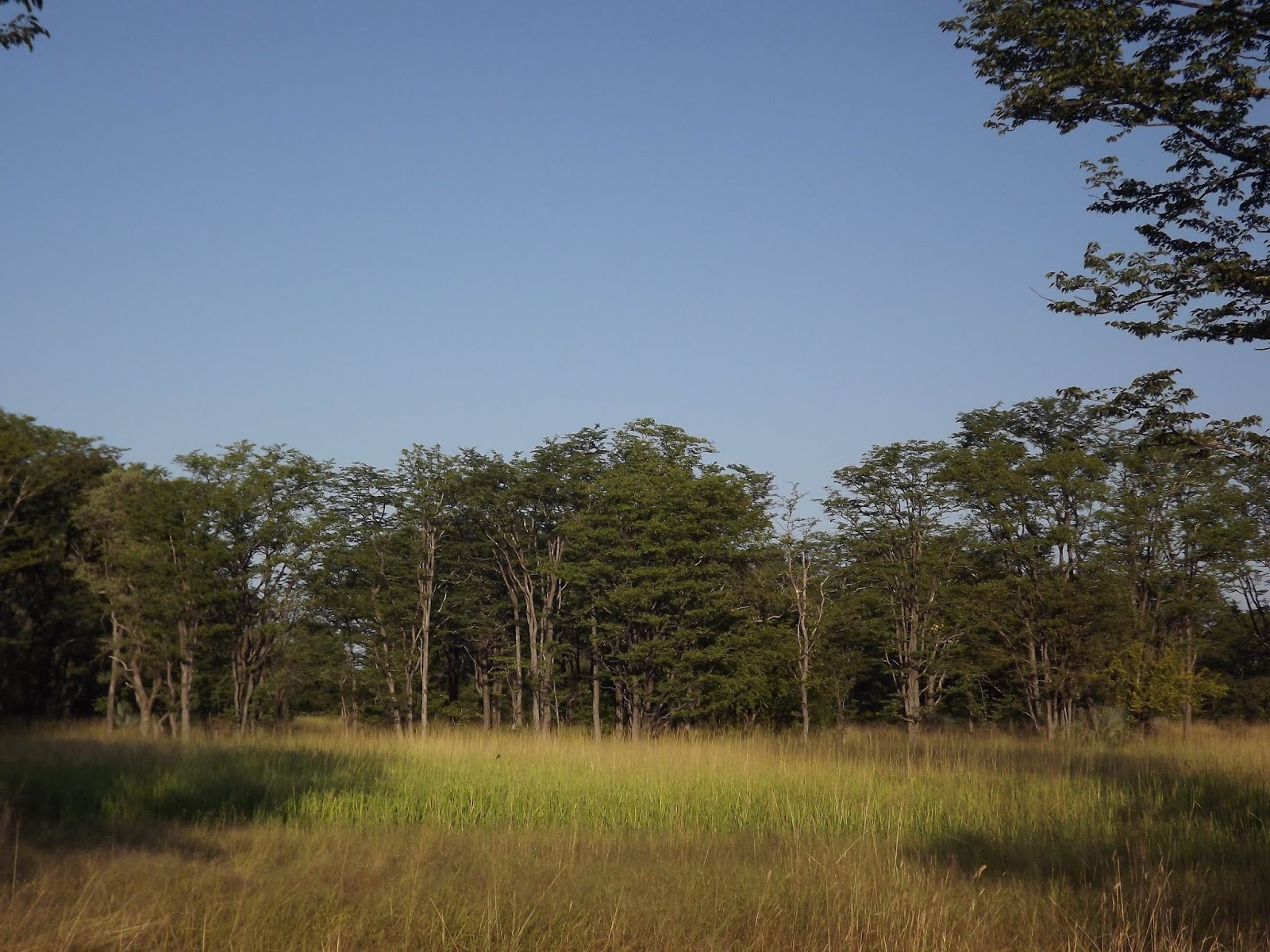
Above: Zambia's Mopane woodland on which the lovebird seems to rely; Below: large Mopane tree turned into a canoe in situ (Photos: Chao)


 Presently, this Lovebird is thought to be Africa’s most localised parrot species with a restricted range of around 5500 sq. km. Within its restricted range, the species is clumped and localised to stands of mopane with large trees and permanent water sources. The naturally formed cavities in live mature Mopane trees are A. nigrigenis’ choice of roosting sites; these double as nesting sites during the breeding season. The roost site location is stable for as long as a site remains intact and undisturbed. This makes the bird extremely vulnerable to land-use/habitat change within its range, especially the with increased cutting of large mopane trees for firewood and timber, as well as agriculture expansion for Maize, Sorghum and Millet which have replaced a large section of the woodland habitats. 

Flooded Mopane - water sources may be key to the bird's survival especially in the dry season (Photo: Chao)
 However, perhaps the most important influence on the species has been the fall in surface-water availability over the last 25 years – as a result of both changing climate and patterns of water usage in the region. A significant reduction in surface water sources has been recorded in much of south western Zambia in light of several factors including but not limited to; low annual rainfall (shorter rain season), human population growth and increase in livestock farming. 
Above: An objective of the PhD is to find out how limiting drinking opportunities are for the lovebird; Below: Waterholes are clearly multi-use - a challenge is to find a way that people and lovebirds can co-habit (Photos: Chao)

The primary aim of this project is to improve significantly our level of knowledge of (and hence our capacity to counteract) the factors that currently limit the global population of the Black-cheeked Lovebird (BCL). At the same time, an important secondary aim of the project is to provide a strong ecological training for me, young bird conservationist in Zambia, as a long-term investment in both BWZ and the protection and survival of the lovebird. To achieve both aims, the project will take the following objectives:

1. To assess and establish the species range, abundance and population using point and transect count methods.
 

2. To document the state of the species habitat and its associations as well as possible local perceptions regarding the species and their impacts on its distribution and abundance.
 

3. To identify and monitor a series of waterbodies that are used and unused by BCL using citizen science and remote sensing.
 

4. To use historical and current presence records (e.g. from 1.) to build species distribution models (SDMs) for BCL to determine the influence of landscape features, habitat and waterbody location on its distribution.
 

5. To prescribe management strategies using SDMs of future scenarios regarding water availability and suitable habitat.


It's rare to see our three Loro Parque Fundación parrot PhDers in the same room. L>R Anna Reuleaux (Yellow-crested Cockatoo), Andrea Thomen (Hispaniolan parrots) & Chaona Phiri (Photo: Fraser Combe)

Saturday, 12 May 2018

Worrying news on Timneh Parrots from Gola


Posted by Simon Valle & Stuart Marsden

The Timneh Parrot (Psittacus timneh) together with the congeneric Grey Parrot (Psittacus erithacus) has recently been uplisted, to Endangered based on the suspected decline due to habitat loss and trapping for the pet trade (BirdLife International 2018). However, the hard truth is that we have hardly any data on the size and trends of the populations that dwell in the remaining forest patches across its range. As part of a project generously funded by the Parrot Wildlife Foundation, successfully launched inaugurated with a productive workshop at the Gola Rainforest National Park (GRNP), Dr Simon Valle (Bangor University) has spent four weeks surveying in and around GRNP to understand how abundant the species may be. 

Community guide Mohamed Nyallay (left) and porters Mustapha Kanneh (centre) and Keni Desmond on their way to set a base camp in the heart of Gola Rainforest National Park (Photo: S. Valle)

Preliminary results from the surveys have raised some serious concerns for the species in Gola, despite being probably one of the best preserved and managed protected areas in West Africa. Simon and his team often struggled to find any parrots even in the better-preserved forest at the core of the national park. Encounters were rare and far apart and judging from the extremely low encounter rates (0.3 parrots/hour), and, until the analysis is done, we can only assume that Timneh Parrots presumably persist at very low densities in the area as a whole. These figures are alarming if we compare them to those of healthy populations of the congeneric Grey Parrot such as the 30 ± 8 parrots per sq km in Lobéké National Park, Cameroun (Marsden et al. 2015), or the 59 ± 4 parrots  per sq km on the Island of Príncipe, São Tomé & Príncipe (Valle et al. 2017). 


A rare encounter in Gola forest. 
Community Guide Mohamed Mansare` listens to a 
group of Timneh Parrots feeding on a nearby tree.


Most encounters were from the 4-km buffer zone that surrounds the park, where the forest is under continuous threat from inhabitants of the surrounding settlements. The buffer zone holds pockets of reasonably intact forest and hosts some very successful wildlife -friendly cocoa farms managed in partnership with the park authorities. However, in some areas, the buffer zone still bears the clear signs of slash-and-burn farming, selective logging for valuable timber and mining for gold and diamonds. These are the areas where the work of the park authorities is the most difficult and the survival of the remaining forest most fragile.


A team surveys for Timneh Parrots in the 4-km buffer zone around the Gola Rainforest National Park, where large areas are cleared with fire to make space for subsistence farming (Photo: S. Valle)


The data collected in GRNP are an important alarm bell and shows us that a well-protected and carefully managed protected area may not be sufficient to guarantee the recovery of a population to a healthy state, or at least not before many years (Valle et al. 2018). Moreover, these results highlight the importance of performing similar surveys across the range to assess the true conservation status of this species and the need for consistent monitoring of the remaining populations. With this in mind, and following up on the successful training held in GRNP, Simon has delivered a further workshop at the HQ of the National Protected Areas Authority, the government agency which manages all protected areas across the country. Together with Prof Stuart Marsden (Manchester Metropolitan University), Simon will keep on working closely with the NPAA and GRNP to develop a long-term countrywide monitoring scheme for Timneh Parrot, probably the first of its kind in Africa.

References

BirdLife International (2018) Species factsheet: Psittacus timneh. Downloaded from http://www.birdlife.org on 12/05/2018
Marsden, S.J., Loqueh, E., Takuo, J.M., Hart, J.A., Abani, R., Ahon, D.B., Annorbah, N.N.D., Johnson, R., & Valle, S. (2015) Using encounter rates as surrogates for density estimates makes monitoring of the heavily-traded grey parrots achievable across Africa. Oryx 50(4):617-625
Valle, S., Collar, N.J., Harris, E., & Marsden, S.J. (2017) Spatial and seasonal variation in abundance within an insular grey parrot population. African Journal of Ecology 55(4):433-442
Valle, S., Collar, N.J., Harris, E., & Marsden, S.J. (2018) Effects of trapping method and capture rate variability on harvest sustainability in a heavily traded parrot. Biological Conservation 217:428–436


Saturday, 31 March 2018

Spotlight on Timneh Parrot

 Posted by Stu, Simon Valle & Amy Marsden

Ever since Simon Valle (now Bangor University) and Nat Annorbah finished their PhDs on Grey Parrots here at MMU, we’ve been itching to start more work on this stunning but troubled taxon. The opportunity arrived in the form of a grant from the newly formed Parrot Wildlife Foundation See their website, a French charity dedicated to parrot welfare and conservation run by Eric Vignot. Stu had spent a very pleasant week in early March with Eric and Irina in Dominican Republic, kicking off Andrea Thomen’s PhD on parrots on that island. Now it was time for something a little tougher.

Above - Simon talking about Timneh's range (Photo: Amy); Below - Stu introducing the science behind the simple encounter rate method (Photo: Simon)


There are two main components to the project – a workshop on Timneh Parrot monitoring and a survey of the parrot across the Gola Rainforest National Park (GRNP). This post describes the former and some thoughts on how Timneh Parrots can be monitored effectively but practically long term across their range. 


Relaxing after practicing fieldwork in Gola
The three-day course took place at GRNP’s research station/guest lodge in Lalehun. The attendees for the workshop represented a number of institutions and organisations working within conservation in Sierra Leone - the Conservation Society of Sierra Leone (CSSL), National Protected Area Authority (NPAA), students and lecturers from Njala University and Eastern Polytechnic, and staff from the Gola Rainforest itself. Mustapha Songe, a tour guide from a community on the border of the National Park, also attended. The aim was to introduce delegates to the ecology and plight of the Timneh, train them in a simple method to monitor parrots that can be done whilst conducting their usual duties, and to discuss ways in which a scheme to monitor Timnehs could possibly be rolled out across Sierra Leone.


Lovely t-shirts and other course materials - thanks to Bearprint Design, TinnedSnail, and Amy Marsden (Photos: Amy)
The method itself centres on a paper we published in Oryx in 2015 – we identified the relationship between grey parrot abundance as estimated using Distance sampling and an ‘on-the-hoof’ encounter rate method (simply the number of parrot groups seen or heard per hour of walking or sitting). The course included plenty of field practice and discussion, especially feedback on how the method could be tailored for the local situation. We were all delighted with both the level of interest and understanding (many participants had little or no biological training), and the enthusiasm for taking forward a countrywide parrot monitoring scheme. Certainly, Timneh Parrot monitoring is on the agenda for Gola, and we hope elsewhere too. Simon will be visiting NPAA in Freetown to discuss possibilities in other protected areas.


The course is only the beginning of our work at Gola. Simon is starting five weeks of fieldwork right across the National Park to estimate abundance and habitat needs of the species. The first step on this exciting journey was to check out reports of a large parrot roost in a community forest close to Gola with Patrick Dauda of the park’s Research & Monitoring Department. We were unable to see parrots at what seems to be a ‘flexible’ roosting area, but hope that Simon and Patrick will be able to return to the site to check on numbers of parrots in the area.


Checking potential roosting tree in one of the community forests on the border of the Nartional Park (Photo: Amy)

We thank: Alusine Kpara, Sheriff Mohamed V, Mustapha Dabenie, Ahmed M Swaray, Amara Aruma, Ibraihim J Kallon (GRNP); Momoh Bai Sesay, Mohamed Sama (CSSL); Osman Deen, Alhassan Khalli Kamara, Abdul Karim Sesay, Wuyatta Kallon (NPAA); Bobson Kobba (Njala University), James Feika (Eastern Polytechnic); and Mustapha Songe (Community tour guide) for interesting discussions during the course. Special thanks go to Benjamin Barca, Brima Sheku Turay, and Patrick Dauda of Gola Rainforest National Park for their amazing support and help with logistics. The project is funded by Parrot Wildlife Foundation.


Tuesday, 16 January 2018

The trapping of adult grey parrots is ruinous

Posted by Simon Valle & Stu

In a paper just published in Biological Conservation, Simon Valle et al. investigated how different capture methods and other aspects of parrot trade, other than just the actual volume of birds taken from the wild, can affect sustainability of harvest. This is of course important as the ‘currency’ which is generally used by CITES and government agencies to assess the impact of bird trade is usually solely the total number taken from the wild. This paper shows how crucial it is to also consider other facets of the trade – if adults or nestlings are taken, how may fluctuations in annual harvest affect sustainability, and what role may habitat loss or augmentation have in influencing population stability. 


The study was grounded in the building of a population viability model (PVA), a tool often used in conservation biology to see how populations might grow or decline in the future. These models use demographic parameters such as birth rates, mortality of juveniles and adults, longevity, and other life history traits to predict future population trajectories and to identify those aspects of the animals’ lives that are most crucial to safeguard. PVAs are data-hungry, and the lack of real data from wild populations means that, often, parameters have to be taken from other species, from captive birds, or are simply guessed. Our models used some data (e.g. on mortality) from other large parrot species, but Simon’s months of fieldwork on the grey parrot (Psittacus erithacus) population on Príncipe meant that we had a reasonable idea of most of the parameters needed for the running of the models.

Inquisitive subadult grey parrot kept as a pet on the island of Príncipe.This individual would have been originally caught as a chick from the nest, as is common  practice on the island .

Our first important finding was that there was a very fine line between a harvest being sustainable in the long term, and ruinous. A harvest of around 900 individuals per year allowed the population to thrive, but one of 1000 birds almost certainly resulted in extinction of grey parrots on the island. Hence, to keep trade sustainable, we would need to relying on a scientific balancing act, but this is the polar opposite of how grey parrot trade is currently managed – we have little or no confidence that quotas are strictly adhered to, mortality in trade is pitiful and unknown, and often we don’t even know from which country the parrots were even caught.     

Predicted population trajectories in response to no harvest (0% of the initial population); and annual harvests (SD) of 600 (100), i.e. 7.5% of the initial population, 900 (100), and 1200 (100) chicks, i.e. 15% of the initial population. Light grey lines =population trajectories resulting from each simulation; black solid lines = mean trajectory.

Even more disturbing is that the age of birds taken from the wild blows simple numbers of birds taken out of the water in terms of its importance. On Principe, there was a tradition of only taking chicks from nests, and leaving the adults to be. This is likely one of the keys to the species’ survival in large numbers on the island. The figure below shows how disastrous the taking of just a few adults can be. The taking of birds ‘randomly’ from the population, as might be done in places like Cameroon where birds are caught en mass at aggregations, is utterly ruinous.


Difference in predicted 50-year trends when the population is subject to a harvest of 900 ± 100 harvesting chicks only, nest raiding (i.e. one adult is collected with every two chicks) and indiscriminate trapping.

Another interesting finding of the study was that having a ‘steady’ (well-managed and well-policed) harvest of small numbers of birds every year is more likely to be sustainable in the long term than a harvest that is inconsistent across years. The message here is that booms and busts of parrot trapping are not a good thing.  

Predicted population trend and individual simulations in response to harvesting a fixed (left) or variable (right) quota of 900 (top) and of 1000 (bottom) chicks each year

But booms and busts, high and variable mortality and other real uncertainties are exactly the realities that have plagued the trade in grey parrots for the past decades. Effective trade management seems a million miles away from what is happening at present across the species’ range.

On Príncipe grey parrots are commonly raised together with other household pets.

The research on the Grey Parrots in Príncipe was funded by


and supported by


Monday, 31 July 2017

Survival ecology for the Yellow-crested Cockatoo

Posted by Anna Reuleaux

Two years ago we attended a workshop on Yellow-crested Cockatoo conservation on Sumba which quickly resulted in several research projects on the species. These research projects funded by Loro Parque Fundación (LPF) and Zoologische Gesellschaft für Arten- und Populationsschutz (ZGAP) were combined into a PhD project for Anna. Here she reports on the first full year of work.


Cockatoos on Sumba inspecting cavity (Photo: Anna Reuleaux)

Yellow-crested Cockatoo Cacatua sulphurea is endemic to Indonesia and Timor Leste, and Critically Endangered. They used to be common throughout the Lesser Sundas and Sulawesi - so common that most older villagers remember being sent to the fields to kill cockatoos in their childhood to protect the corn harvest. Now the cockatoos are so rare that the majority of children have never seen one. Anna’s PhD research aims to provide the knowledge base for urgently needed conservation action for this charismatic species. This includes finding out which of the former cockatoo populations on the Lesser Sundas and Sulawesi still prevail, estimating their numbers, and, most importantly, understanding why the species survived in some locations and died out in others. Examining the productivity of the species and its limiting factors is also essential for understanding viability, or lack of it, within the populations. 

Climbing ladders to access cockatoo nests were still evident on Pantar (Photo: Anna Reuleaux)

Dynamics of the Sumba population

The largest remaining population is found on Sumba with remaining population numbers of the orange-crested sub-species C. s. citrinocristata thought, at the last count, to be in the thousands (Cahill et al. 2005). Burung Indonesia (the Birdlife Partner) and the Fund for Endangered Parrots (a working group of ZGAP) have been working together in a successful long-term public awareness campaign on the island, which has resulted in the creation of a National Park, and poaching coming to a virtual halt on Sumba.


Cockatoo roost on Sumba (Photo: Anna Reuleaux)
In order to judge viability of the population it is essential to understand the demographic parameters and limiting factors for reproduction. Therefore Anna and the cockatoo team of Burung Indonesia have set out to monitor nests during the core breeding season from October to March. Finding active nests has proven difficult, but with increased search efforts in the 2015/16 season, the team found 19 sites that were prospected by cockatoos. Unfortunately only five had eggs laid in them and only one chick fledged. A second single chick was already sticking its head out of the cavity entrance which indicated nearing fledging but on the next visit it looked like this (see Figure below). This cockatoo chick died shortly before fledging, probably due to predation. The skeletonised remains were found in the cavity without the skull.

This cockatoo chick died shortly before fledging, probably due to predation (Photo: Ana Reuleaux)
Cockatoo chicks very much alive and looking forward to contributing to viability of the Sumba population (Photo: Anna Reuleaux)
Frustrated with the unknown causes for nest failures in the first season, the team installed camera traps above the entrances of prospected cavities for the 2016/17 season. Although there was no lack of cockatoo activity around the monitored cavities, only two active nests were found, both late in the breeding cycle, and in previously unmonitored cavities. One of the pairs even fledged two chicks, which is a first in documented nest attempts on Sumba.
Camera trap footage from cavities provided ample evidence of competitors and potential predators.
A Long-tailed macaque Macaca fascicularis and an Asian Palm Civet Paradoxurus hermaphroditus were caught looking into a cockatoo cavity, which was luckily empty at the time. Two species of owls used the cavities at night on a regular basis, Short-tailed Starlings Aplonis minor, Great-billed Parrots Tanygnathus megalorynchos and Eclectus Parrots Eclectus roratus occupied sites that were abandoned by cockatoos.

Sumba has an inordinate number of birds species interested in holes in trees - here, the endemic hornbill inspects (Photo: Anna Reuleaux)

Where do other populations remain, and why?


There are six other C. sulphurea subspecies in the Lesser Sundas, on Sulawesi and on three small island groups in the Sulawesi and Java Sea. From March to May this year, Anna went on a ‘road trip’ to survey the populations of C. s. occidentalis on the island chain between Sumbawa and Alor. The largest remaining population of this subspecies is in Komodo National Park and will be surveyed later this year. Between Sumbawa and Alor there are about 70 locations with Yellow-crested Cockatoo records of the past (Threatened birds of Asia and other reports), most of which are certain to be free of cockatoos today. Anna and field assistant Romy from Burung’s Sumba programme set out to survey the most promising of these locations, estimate approximate numbers and find likely sets of conditions allowing populations to survive.


The team found surviving populations in fifteen locations varying in (minimum) size between four and 46 individuals. Evidence for capture of cockatoos was almost universal in all populations: captive birds in the villages, ‘harvested’ numbers reported by locals, or climbing setups still visible on the nest trees. The reasons why these populations are still clinging on are very varied and each place has its own story, but what all have in common is some sort of protection from capture for the pet trade. This may be remoteness, difficult access, a formally protected area, sacred land, exclusive and perhaps sustainable harvesting by one trapper, a climbing accident, and awareness work by NGOs. The amount and normality of trapping still happening was shocking and will surely lead to the extinction of populations in the near future, if nothing is done about it.


Cockatoos survive in areas that are difficult to access, like here on Alor (Photo: Anna Reuleaux)
From July to September Anna will survey the population on Sumba to obtain a much needed new population estimate. This distance sampling survey will try to match previous surveys as closely as possible, and will include other key bird species and habitat parameters. In October, Burung’s Ecologist Benny and Anna will estimate the cockatoo population of Komodo National Park. They will spend 4-6 weeks on the islands of Komodo and Rinca and use distance sampling methods similar to those applied on Sumba.

The Rinca-Robong-Flores daily cockatoo commute (Photo: Anna Reuleaux)
 The Sumba cockatoo breeding season will already have started when Anna and Benny get back to Sumba. The trail cameras will remain in place on the nest trees year round. Hopefully more of the monitored cavities will become active and additional ones can be found. Once the breeding season calms down with chicks starting to fledge, it will be time for Anna to survey the rest of the species’ range for remaining populations: West Timor and Timor Leste, Sulawesi and the islands of Tanahjampea and Wakatobi. The remote population of C. s. abbotti on Masalembo may not need a visit as it is tiny and closely monitored by other organisations.
 
Romy scanning for cockatoos on Pulau Adonara (Photo: Anna Reuleaux)

When the results of all these surveys come together, we will have a much better understanding of the Yellow-crested Cockatoo’s status and be able to identify key areas for immediate conservation interventions and for more long term work. Anna’s PhD, supervised by Stu, along with Martin Jones (MMU), Nigel Collar (BirdLife), and Ani Mardiastuti (Agricultural University Bogor), is due in 2019.

This project is funded by Loro Parque Fundación, Zoologische Gesellschaft für Arten-und Populationsschutz, Fond für bedrohte Papageien and Strunden Papageienstiftung. Currently Anna is supported by a scholarship of the German Academic Exchange Service (DAAD). The work is a close cooperation with Burung Indonesia, particularly with the team on Sumba. Further counterparts in Indonesia are Agricultural University Bogor (IPB, Prof. Ani Mardiastuti) and Universitas Nusa Cendana, Kupang. We are grateful that the Indonesian Government (Ristekdikti and KLHK) gave permission for this research. 


References

Cahill, A. J., Walker, J. S. and Marsden, S. J. (2006). Recovery within a population of the Critically Endangered citron-crested cockatoo Cacatua sulphurea citrinocristata in Indonesia after 10 years of international trade control. Oryx 40: 161–167.

Friday, 5 May 2017

Parrots and parakeets in the Dominican Republic

Posted by Stu

Hispaniola is an extraordinary place physically, culturally and biologically. The western third of the island is Haiti, born out of a slave rebellion at the end of the 18th Century, and seemingly being punished/punishing itself ever since. The eastern two-thirds is Dominican Republic (DR), with the Caribbean’s tallest mountain, oldest colonial city, and largest tourism business. The island is home to around 38 endemic bird species, including a ‘tropical’ crossbill and the Palmchat, which represents an endemic family on the island. It is also home to the poisonous Hispaniolan Solenodon Solenodon paradoxus, Number 7 in ZSL’s EDGE mammal chart due to its phylogenetic distinctiveness and its Endangered Red list status.

Good forest remains in the Parque Nacional Sierra de Bahoruco (Photo: Stu)

I was in Dominican Republic (DR) with my good friend and ex-PhD student Matt Geary (now University of Chester) to scope out a potential study of the Hispaniolan Amazon Amazona ventralis, Hispaniolan Parakeet Psittacara chloropterus, both Vulnerable, the Near-threatened Hispaniolan Trogon Temnotrogon roseigaster and other important birds on the island. Our hosts were Groupo Jaragua, the DR BirdLife partner.


The first two days were spent meeting Yolanda Leon (President) and Andrea Thomen (Project Manager) of Groupo Jaragua to discuss potential projects and our field visits. We were quite shocked by the volume of parrot ownership in the country’s cities and towns. We also had time to visit a couple of sites in the country’s capital Santo Domingo. The excellent botanical gardens had some of the commoner lowland endemics including the excellent Hispaniolan Lizard Cuckoo and good numbers of wintering American passerines including Prairie Warbler, many Cape May Warblers, and the lovely Black-throated Blue Warbler. We visited a large Hotel in a posh area of town and watched perhaps more than 500 Hispaniolan Parakeets and a couple of Hispaniolan Amazons arrive from various green spaces across the city to roost in trees in front of the hotel. 

 
Vulnerable Hispaniolan Parakeets Psittacara chloropterus getting ready to roost (Photo: Yolanda Leon)

Then we moved southwest to Groupo’s Oviedo field station for three days. Here we visited southwestern side of the famous Parque Nacional Sierra de Bahoruco. We recorded reasonable numbers of the parrots here, both in the mixed pine/broadleaf forests and in cloud forest patches at  higher altitude. A parrot nestbox scheme didn’t seem to be doing too well – there is a lot of pressure from parrot catchers up here, with apparently little intervention by the poorly paid park guards. Nice birds included both the endemic Hispaniolan and introduced Olive-throated, Hispaniolan Crossbill and Golden Swallow. There were also a lot of American warblers up here – especially Black-throated Blues but also the odd Blackburnian and Black-throated Green, as well as the resident Pine warblers.

Hispaniolan Amazons Amazona ventralis (VU) in Parque Nacional Jaragua (Photo: Yolanda Leon)
A long and hot hike into the Parc Nacional Jaragua with Julio, an ex-parrot trapper, was extremely interesting. Parrot nests in fat-trunked Cherry Palms and the few remaining large trees in this dry spiny forest but are hammered both by local trappers and, more worryingly, by a team of ‘professional’ trappers who apparently took around 150 chicks last year. Nest trees/palms are identified at the start of the breeding season (April) and these are monitored as chicks grow until they are harvested just before fledging. Worryingly, there seems to be so much competition among trappers that chicks are being taken from nests earlier and earlier (to ensure others don’t take them first). One consolation perhaps is that the terrain is very difficult and I (may be wrong) but can imagine that not all nests in the large area are found – the species usually produces four chicks so a few successful nests coupled with the ‘fact’ that adults are not taken might be the key to sustaining the population. The gorgeous Broad-billed Tody occurred in the area at huge densities, and perhaps some signs of Solenodon in the less rocky areas.

Above: Discussions about parrot harvesting in Parque Nacional Jaragua (Photo: Matt Geary), Below: Old parrot nest cavity in Cherry Palm (Photo: Yolanda Leon)

Our final field trip was to Reserva Ebano Verde, a private reserve owned and run for the DR government by Fundacion Progressio, a DR banking trust. The contrast between this and the state-run parks was immediately obvious – no encroachment and proper control of trapping. Here there were high densities of Hispaniolan Trogons, helped in part to nest boxes put up by Simón Guerrero, a retired ornithology lecturer and passionate conservationist. We saw parrots here also but it also became apparent that the Hispaniolan Parakeet is really not doing well across the country. The cause of its decline is not known and is puzzling, especially considering it seems to be taking over the capital city! 


Illegal farming is a problem in DR's national parks (Photo: Stu)
There is much to find out about the hole-nesters on Hispaniola. I was quite surprised how many parrots are taken as pets in the cities, how rare the parakeet was, the level of corruption in the country, and also how much forest loss there has been away from the very dry forests of the lowlands and the montane areas. Hispaniolan Oriole is perhaps a bird to watch as it may be getting very scarce. Certainly not scarce is the endemic woodpecker - I have never seen so many woodpeckers anywhere in my life – they are literally everywhere and these birds must be important in creating holes for the secondary cavity nesters. Matt, Nigel Collar and I hope to be able to find funding for a PhD for a Dominican soon.