Showing posts with label Publications. Show all posts

Tuesday, 16 January 2018

The trapping of adult grey parrots is ruinous

Posted by Simon Valle & Stu

In a paper just published in Biological Conservation, Simon Valle et al. investigated how different capture methods and other aspects of parrot trade, other than just the actual volume of birds taken from the wild, can affect sustainability of harvest. This is of course important as the ‘currency’ which is generally used by CITES and government agencies to assess the impact of bird trade is usually solely the total number taken from the wild. This paper shows how crucial it is to also consider other facets of the trade – if adults or nestlings are taken, how may fluctuations in annual harvest affect sustainability, and what role may habitat loss or augmentation have in influencing population stability. 


The study was grounded in the building of a population viability model (PVA), a tool often used in conservation biology to see how populations might grow or decline in the future. These models use demographic parameters such as birth rates, mortality of juveniles and adults, longevity, and other life history traits to predict future population trajectories and to identify those aspects of the animals’ lives that are most crucial to safeguard. PVAs are data-hungry, and the lack of real data from wild populations means that, often, parameters have to be taken from other species, from captive birds, or are simply guessed. Our models used some data (e.g. on mortality) from other large parrot species, but Simon’s months of fieldwork on the grey parrot (Psittacus erithacus) population on Príncipe meant that we had a reasonable idea of most of the parameters needed for the running of the models.

Inquisitive subadult grey parrot kept as a pet on the island of Príncipe.This individual would have been originally caught as a chick from the nest, as is common  practice on the island .

Our first important finding was that there was a very fine line between a harvest being sustainable in the long term, and ruinous. A harvest of around 900 individuals per year allowed the population to thrive, but one of 1000 birds almost certainly resulted in extinction of grey parrots on the island. Hence, to keep trade sustainable, we would need to relying on a scientific balancing act, but this is the polar opposite of how grey parrot trade is currently managed – we have little or no confidence that quotas are strictly adhered to, mortality in trade is pitiful and unknown, and often we don’t even know from which country the parrots were even caught.     

Predicted population trajectories in response to no harvest (0% of the initial population); and annual harvests (SD) of 600 (100), i.e. 7.5% of the initial population, 900 (100), and 1200 (100) chicks, i.e. 15% of the initial population. Light grey lines =population trajectories resulting from each simulation; black solid lines = mean trajectory.

Even more disturbing is that the age of birds taken from the wild blows simple numbers of birds taken out of the water in terms of its importance. On Principe, there was a tradition of only taking chicks from nests, and leaving the adults to be. This is likely one of the keys to the species’ survival in large numbers on the island. The figure below shows how disastrous the taking of just a few adults can be. The taking of birds ‘randomly’ from the population, as might be done in places like Cameroon where birds are caught en mass at aggregations, is utterly ruinous.


Difference in predicted 50-year trends when the population is subject to a harvest of 900 ± 100 harvesting chicks only, nest raiding (i.e. one adult is collected with every two chicks) and indiscriminate trapping.

Another interesting finding of the study was that having a ‘steady’ (well-managed and well-policed) harvest of small numbers of birds every year is more likely to be sustainable in the long term than a harvest that is inconsistent across years. The message here is that booms and busts of parrot trapping are not a good thing.  

Predicted population trend and individual simulations in response to harvesting a fixed (left) or variable (right) quota of 900 (top) and of 1000 (bottom) chicks each year

But booms and busts, high and variable mortality and other real uncertainties are exactly the realities that have plagued the trade in grey parrots for the past decades. Effective trade management seems a million miles away from what is happening at present across the species’ range.

On Príncipe grey parrots are commonly raised together with other household pets.

The research on the Grey Parrots in Príncipe was funded by


and supported by


Friday, 1 July 2016

A new Viper for Europe - already Endangered

Posted by Stu

It is not every day that a new vertebrate is described from Europe. In a new paper published in Journal of Zoological Systematics and Evolutionary Research, Samuele Ghielmi and Michele Menegon (MUSE - Museo delle Scienze, Trento), Lorenzo Laddaga (Museo di Scienze, Domodossola), Sylvain Ursenbacher (University of Basel) and Stu talk about the ‘discovery’, morphology, genetics and conservation of Vipera walser, a new viper species from the north-western Italian Alps.


In 2005, Samuele Ghielmi noticed something odd about adders and lizards in the north-western Italian Alps. First, there was a population of European Adder Vipera berus in the area that was disjunct from V. berus populations in the rest of Europe. More intriguing was that within this area, the Common Lizard Zootoca vivipara, one of the adder’s main prey items over much of its European range, was replaced by Zootoca carniolica, its ancestral oviparous (egg-laying) sister species. This observation sparked a morphological and genetic study which led to the naming of Vipera walser. 


The beast - variation in individuals of Vipera walser sp. nov. Adult males (left) and adult females (right).

Vipera walser sp. Nov.

The new species is remarkably distinct genetically from both V. berus and other vipers occurring in western Europe. It shows closer affinities to V. darevskii and V. kaznakovi, species occurring in the Caucasus as well as to the widespread Meadow Viper V. ursinii complex. Morphologically, the new species appears to be more similar to V. berus than to its closest relatives occurring in the Caucasus, but can be readily distinguished in most cases by a combination of meristic features such as number of crown, loreal and periocular scales.


Phylogenetic tree showing position of Vipera walser, and relationships with other Vipera species.

Already Endangered

My own main interest in the new viper is in its conservation. The species is extremely range-restricted (< 500 sq. km) and occurs only in two disjunct sites within the high rainfall valleys of the Alps north of Biella. We recommend that the new species should be classified as globally ‘Endangered’ due to its small and fragmented range, and an inferred population decline (Red List criteria B1a/B2a). The other species closely related to walser are also either Endangered (V. kaznakovi) or Critically Endangered (V. darevskii) so the entire clade is in serious danger of being lost.

The new viper appears to be quite common in suitable habitat within its range. We need detailed studies of the species’ precise habitat requirements, to determine how past and current land use changes have affected the species, and how they might be altered to benefit the species in the near future. The species appears to inhabit open areas, often with rocky outcrops, and may not tolerate woodland unless it is very sparse. European mountains experienced a long period of agropastoral expansion from the Late Middle Ages to the 19th century, with large areas of the Alps converted to pasture and heathlands. These open landscapes were presumably beneficial for V. walser. However, the decline in agropastoral activities in the last 100 years and associated afforestation is probably the biggest threat to the species. Other immediate threats are culling and collection of specimens by enthusiasts.


Habitat of Vipera walser sp. nov

Longer term, the ability of V. walser to withstand or adapt to climatic change expected to take place within its range will be crucial. Its current habitat is restricted to just a few valleys, which experience some of the highest rainfall in the Alps. Climate models indicate that in the next 20 years, these valleys will become far wetter and warmer. Research on how the viper might be able to react to climate change is a priority.


Sunday, 12 June 2016

Better forest 'simply' means more frugivores

Posted by Stu
 

We think our paper, just published in Forest Ecology & Management, has quite an important message, and one that should be encouraging, even in an archipelago with so little forest remaining and so many threatened species.


The study was part of Carmela Espanola’s PhD here at MMU and supervised by Nigel Collar, Aldrin Mallari and myself. She and her team walked around 500 km of transects, at 24 sites on the Philippine island of Luzon, looking for large avian frugivores. The target species included large pigeons, hornbills and parrots – birds crucial to proper functioning of forests in the tropics. If these seed dispersing birds disappear or become ‘functionally extinct’ then we might expect serious consequences for the health of forests.

The Imperial pigeons Ducula are key seed dispersers in southeast Asia's forests (Photo: Christine E. Telesforo)

What we did was to relate the presence of the different species to a series of habitat predictors, recorded at over 1,200 plots along the transects – these included things like altitude, canopy cover, and other indications of the quality of the forest. Basically, we asked what the difference was between plots that contained the frugivore species and those where the species was not found.

Survival for species like this Luzon Bleeding-heart is not just a matter of finding suitable habitat, but also avoiding hunting or capture (Photo: Carmela Espanola)
Our first finding was not so surprising - Frugivore species richness was highest in forest with large-girthed trees. But more interesting was that some small-scale agricultural disturbance was tolerated or even favoured by some species. World birders will know well this pattern – low intensity use of forests, which could be a little logging, or especially the creation of small mixed gardens within the forest, can be very good spots to see frugivorous birds. Importantly, our study showed that frugivore richness was highest in forests on flat ground, areas which are usually the first to be converted to agriculture. 

White-eared Brown-dove can tolerate seriously degraded forest, but still prefers good forest on Luzon (Photo: Pablo Espanola)

But I think the most important aspect of the study was our attempt to find non-linearities and other complexities in frugivore presence and richness responses along the habitat quality gradient. I, for one, felt sure that we would find some places along the disturbance gradient where there would be sudden rises in frugivore abundance – and, that in turn, management could be targeted at these points to gain disproportionate benefits for wildlife.


The forest disturbance gradient - importantly, we found linear increases in frugivore richness along this gradient.

We did not find that – rather, the probability of occurrence increased linearly along the forest quality/restoration gradient. While the precise benefits in terms of seed dispersal, and costs of management, at different points along the quality/restoration gradient are likely to be themselves complex, avian frugivores benefit proportionately from step improvements right along the gradient. Thus, any actions to improve forest quality on Luzon, from reforesting the most degraded lands to preventing degradation of relatively healthy forests, are likely to benefit frugivores. 

Carmela's PhD was funded by Loro Parque Fundacion. She now lectures at University of the Philippines.


Friday, 27 May 2016

Wildfowl demography research - golden goose or lame duck?

Posted by Beth Roberts and Stu
 

The identification of research biases is vital in order to stem the current rate of biodiversity loss. Such identification will help to focus future research, thereby maximising its impact. In our new paper, just published in PLOS ONE (View paper here), Beth, Ed Harris (MMU), Geoff Hilton (WWT) and Stu investigate the taxonomic and geographic biases in wildfowl demographic research, and devise a simple metric that will help to focus research attention to 'plug the gaps' most effectively.


Identifying the biases


We conducted a systematic review of the published research data. First, we used strict criteria to search through two commonly used databases - Web of Knowledge and Google Scholar - for papers relating to wildfowl demography. Our review involved the screening of over 8,000 papers using Preferred Reporting Items for Systematic Reviews and Meta-Analyses (PRISMA) guidelines. Of those papers, 1,586 met the search criteria. Following the screening, we proceeded to identify, in each paper: which demographic measures were recorded; the subject species; and the country of study.


The majority of demographic information for wildfowl is concentrated on just a handful of species. Best-studied is the Mallard, but Pintail Anas acuta, the second best-studied taxon, is far better looking (Photo: Dick Daniels)

We discovered significant research biases, with North America and Europe dominating the research output; species found in those regions accounted for over 90% of the research outputs. In addition, we found that over half (55%) of the research output concerned just 15 species from seven genera.

Geographical bias in wildfowl demography studies - little research has focused on the tropics.

Further, when we examined the distribution of research outputs across threat categories, we found that threatened species were poorly studied. Our research revealed that there were 21 species with no demographic research output at all, seven of which are globally threatened: the Critically Endangered Pink-headed Duck (Rhodonessa caryophyllacea) and Baer’s Pochard (Aythya baeri); the Endangered Campbell Teal (Anas nesiotis); and the Vulnerable White-headed Steamerduck (Tachyeres leucocephalus), Southern Pintail (Anas eatoni), Philippine Duck (Anas luzonica), and Swan Goose (Anser cygnoides).


Importantly, a task force has now been initiated to gather records and carry out survey work on the Baer’s Pochard. The Philippine Duck Project has also been started to gather abundance and demographic information.


The future for Baer’s Pochard Aythya baeri is bleak indeed (Photo: Graham Clarkson, WWT)

Redressing the imbalance in research 

Our aim was to provide a tool for the conservation community to prioritise and address these research gaps, using measures of research output, threat status and the availability of potentially useful surrogate information from congeneric species. According to the metric, the 25 highest priority species include thirteen threatened taxa and nine species each from Asia and South America, and six from Africa. For example, the Blue-winged Goose is classified as Vulnerable, has a restricted range (being found in the highlands of Ethiopia) and has no conspecific species. Our paper exposes the need to examine research gaps not just in isolation, but in conjunction with threat status.

The Ethiopian highland endemic Blue-winged Goose Cyanochen cyanoptera (Photo: Rod Williams, WWT)

Friday, 15 April 2016

Philippines protected areas protecting?

Posted by Stu and Aldrin Mallari

In a paper published in the April issue of the journal Ambio, Aldrin Mallari, Nigel Collar, Phil McGowan and Stu look critically at placement and management of protected areas in the Philippines – and ask whether they are doing an effective job at delivering protection.


Aichi Target 11 of the Convention on Biological Diversity urges that nations protect at least 17% of their land, and that protection is effective and targets areas of importance for biodiversity. So, as well as covering a ‘reasonable’ proportion of a nation’s land surface, a quite hard-and-on-the-face-of-it-simple measure of a country’s commitment to conservation, the target also requires that

-    Those national parks etc are in the right places. We know that protected areas have a tendency to be placed in areas which don’t really need protection – ‘rock and Ice’ parks (Joppa & Pfaff 2009).
 

-    Protected areas do actually do their job in delivering protection to key wildlife – they are not ‘paper parks’ (e.g. Di Minin & Toivonen 2009).

Five years before reporting on Aichi targets is due, we assessed the Philippines’ current protected area system for biodiversity coverage, appropriateness of management regimes and capacity to deliver protection. Although protected estate already covers 11% of the Philippines’ land area, 64% of its Key Biodiversity Areas (KBAs) remain unprotected.


Mindanao bleeding-heart Gallicolumba crinigera is one of many lowland forest specialists in Philippines. This one was found in a snare 200 m from the HQ at Rajah Sikatuna National Park, Bohol (Photo: Stu).

We asked two broad questions of the Philippines protected areas network:

1. Are PAs appropriately positioned to protect areas of particular importance for biodiversity?

2. Are management systems in place and is there adequate capacity in the current protected area system to enable them to function effectively?


Puerto Princesa Puerto Princesa Subterranean River National Park in Palawan (Photo: Dave Lee)

The answer to the first question is, we believe, ‘No’.

While a good proportion of Philippines land area falls within protected areas, there is only a 36% overlap between established protected areas and KBAs (Key Biodiversity Areas – those with the most important species) meaning that 64% of key areas remain unprotected. This shortfall is particularly apparent in small islands like Siquijor (100% unprotected), the Sulus (98%), Batanes/Babuyanes and Greater Negros/Panay (both 75% unprotected).

When we look within a selection of protected areas, we find that there is a mismatch between what is needed to protect key species, and what the protected areas actually protect. The majority of threatened species in Philippines depend on lowland forest – of 40 IUCN threatened bird species, 33 are found only below 1,500 m a.s.l. while 29 are ‘highly forest dependent’. The proportion of strictly protected land that covers lowland primary forest is low – at best 30%, and in some cases none at all.


Mount Apo National Park on Mindanao - a beleaguered protected area due to pressure to convert forest to banana plantations and human habitation (Photo: Aldrin Mallari).

The answer to the second question is, again ‘No’.

Only around 17% of protected areas have a proper management plan and a protected area management board to guide their protection activities. Annual budgets to protect are pitiful in some cases – less than one US$10 per Sq Km in some parks (see Table below). Interestingly, in all five parks looked at, regular ‘BMS’ monitoring data were collected by park staff, but no analysis has been done on all these data.


Through the assistance of the German Government (through the Protected Area Management Effectiveness Project and other similar projects of GIZ) and the USAID (through B+WISER), the Philippines Department of Environment and Natural Resources (DENR) has started to recognise these mismatches and have taken bold moves to rectify the situation. 


Protected areas management planning (Photo: Aldrin Mallari).


The current list of protected areas are being rationalised, management plans are being revised, new and improved management systems are being set up, capacity of management authorities are being enhanced either by skills upgrade and/or additional budget allocations. The system of monitoring of protected areas are currently being improved by using simplified, state of the art, spatially sensitive, mobile technology to complement the existing BMS system. We are thrilled to see more of these positive changes in future, and hope to see continued bilateral support to DENR towards an expanded and more effective network of protected areas in the country!

Mentoring of wildlife patrol staff (Photo: Aldrin Mallari).

References

Di Minin, E. & Toivonen, T. (2009). Global Protected Area Expansion: Creating More than Paper Parks. Bioscience 65: 637-638.

Joppa, L.N. & Pfaff, A. (2009). High and Far: Biases in the Location of Protected Areas. PLOS One http://dx.doi.org/10.1371/journal.pone.0008273

Thursday, 17 December 2015

‘Growing’ new habitat to predict the future for key species

Posted by Matt Geary and Stu

Accurate predictions of the impacts of future land use change on species of conservation
concern can help to inform policy-makers and improve conservation measures. In a new paper just published in PLOS One, we introduce a method, based on open source software, which integrates habitat suitability modelling with scenario-building. We illustrate its use by investigating the effects of alternative land use change scenarios on landscape suitability for black grouse Tetrao tetrix in the Scottish uplands.


Likely changes in the uplands

The first step was to build a habitat suitability model for the species, in this case using the well-used MaxEnt. This gave a standard map of suitability for pixels across the 800 sq km landscape in Perthshire. We wanted to simulate how the upland area might change over the next 20 years so we asked upland experts how they thought the landscape might change – they told us  that most likely were changes from moorland and grazed land to open canopy forestry due to native forestry planting schemes and grazed land to moorland via a reduction in grazing.


A moorland and open woodland mix in Perthshire - a potential result of the reduced grazing scenario which resulted in beneficial landscapes for black grouse (Photo: Matt Geary).

Growing patches of new habitat

To represent how these changes in land use would affect the area, we grew patches of new habitat within the existing landscape (e.g. new patches of open woodland where moorland currently exist). We grew the new patches using a piece of old script in Mathematica supplied by Ed Harris here at MMU, which was updated to work in R and embedded into our model. For each scenario, the cover of different land use types was altered by 5–30% from 20 random starting locations – this enabled us to look at how the amount of new habitat and its spatial positioning of the new land uses might affect their impact on the grouse. We then ran the MaxEnt again with the 20 new landscapes and assessed changes in suitability – much like people do with climate change scenarios and their effects on species ranges.


Effects of land use changes

The scenario where grazed land was replaced by moorland and open forestry was the most beneficial for black grouse, and ‘increased grazing’ (the opposite conversion) the most detrimental. Positioning of new land use blocks was shown to be very important. So it is not just a case of a certain benefit or loss brought about by a certain amount habitat change - where those habitat changes occurred was also very important. This might be helpful to local land use planners and habitat managers – habitats could be placed so as to maximise benefits for a key species, or at least to minimise their detrimental effects.


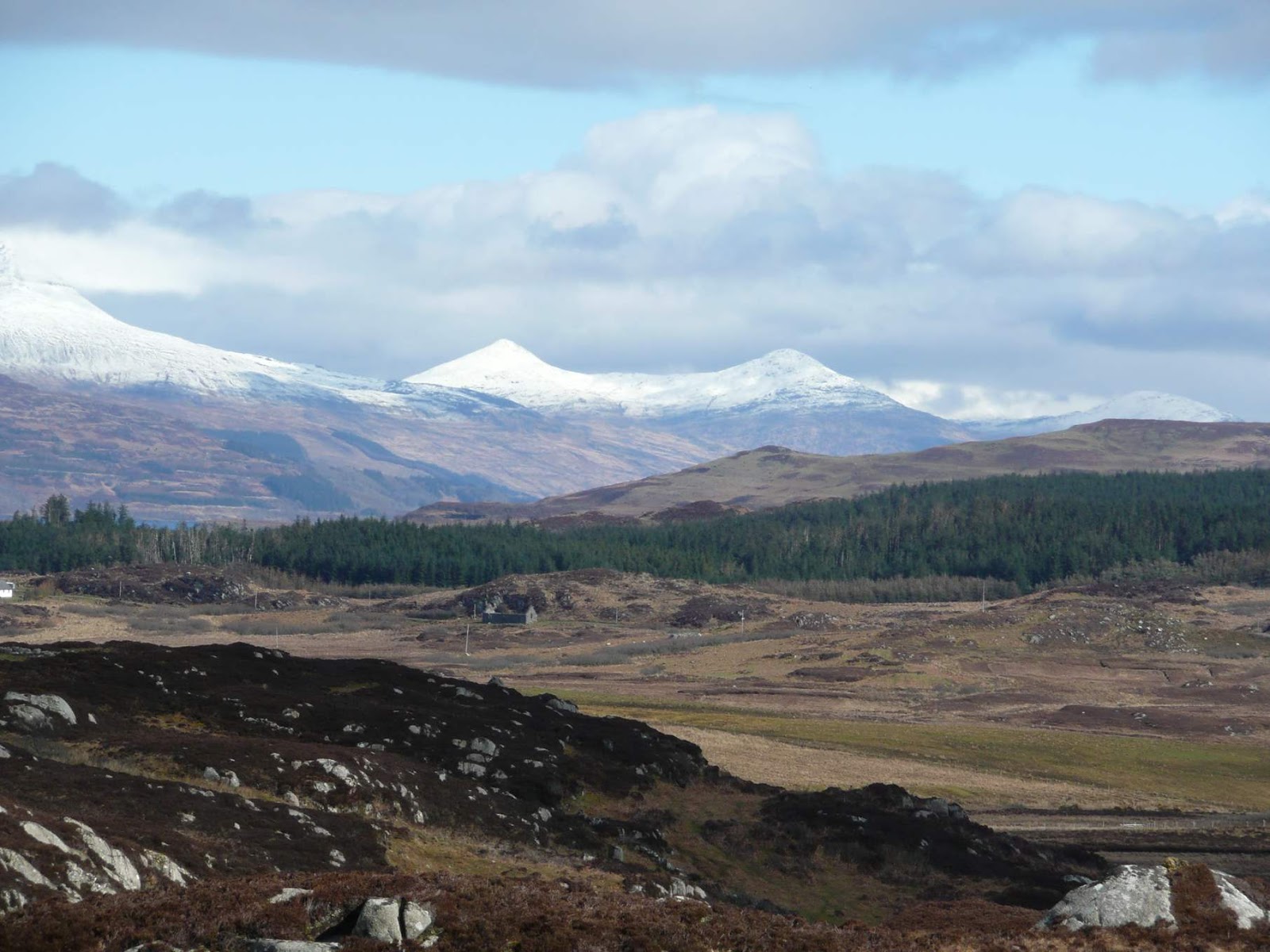
An 'upland' mosaic: Ross of Mull looking across Scoor forest towards Ben Mor (Photo: Alan Fielding).

Another important finding was that, while increasing the area of open canopy forestry caused a proportional decrease in suitability, suitability gains for the ‘reduced grazing’ scenario were nonlinear. Reducing grazing slightly to create small additional amounts of moor and open canopy woodland had small benefits to grouse, but reducing it by 20% had disproportionately large benefits in terms of habitat suitability for the species. Again, this kind of result might help inform local land management and even regional policy such as grant schemes promoting land use changes.

This ‘Scenario-led’ landscape simulation modelling can be applied in assessments of the impacts of land use change both on individual species but also on diversity and community measures, or ecosystem services. A next step would be to include landscape configuration more explicitly in the simulation models, both to make them more realistic, and to examine the effects of habitat placement more thoroughly. 

Matt's PhD was funded by Manchester Metropolitan University and the World Pheasant Association. Matt is now a lecturer in Conservation Biology and Animal Behaviour at the University of Chester. Contact him at M.Geary@Chester.ac.uk. More information about his research is at http://mattgeary.github.com.