Sunday, 12 June 2016

Better forest 'simply' means more frugivores

Posted by Stu
 

We think our paper, just published in Forest Ecology & Management, has quite an important message, and one that should be encouraging, even in an archipelago with so little forest remaining and so many threatened species.


The study was part of Carmela Espanola’s PhD here at MMU and supervised by Nigel Collar, Aldrin Mallari and myself. She and her team walked around 500 km of transects, at 24 sites on the Philippine island of Luzon, looking for large avian frugivores. The target species included large pigeons, hornbills and parrots – birds crucial to proper functioning of forests in the tropics. If these seed dispersing birds disappear or become ‘functionally extinct’ then we might expect serious consequences for the health of forests.

The Imperial pigeons Ducula are key seed dispersers in southeast Asia's forests (Photo: Christine E. Telesforo)

What we did was to relate the presence of the different species to a series of habitat predictors, recorded at over 1,200 plots along the transects – these included things like altitude, canopy cover, and other indications of the quality of the forest. Basically, we asked what the difference was between plots that contained the frugivore species and those where the species was not found.

Survival for species like this Luzon Bleeding-heart is not just a matter of finding suitable habitat, but also avoiding hunting or capture (Photo: Carmela Espanola)
Our first finding was not so surprising - Frugivore species richness was highest in forest with large-girthed trees. But more interesting was that some small-scale agricultural disturbance was tolerated or even favoured by some species. World birders will know well this pattern – low intensity use of forests, which could be a little logging, or especially the creation of small mixed gardens within the forest, can be very good spots to see frugivorous birds. Importantly, our study showed that frugivore richness was highest in forests on flat ground, areas which are usually the first to be converted to agriculture. 

White-eared Brown-dove can tolerate seriously degraded forest, but still prefers good forest on Luzon (Photo: Pablo Espanola)

But I think the most important aspect of the study was our attempt to find non-linearities and other complexities in frugivore presence and richness responses along the habitat quality gradient. I, for one, felt sure that we would find some places along the disturbance gradient where there would be sudden rises in frugivore abundance – and, that in turn, management could be targeted at these points to gain disproportionate benefits for wildlife.


The forest disturbance gradient - importantly, we found linear increases in frugivore richness along this gradient.

We did not find that – rather, the probability of occurrence increased linearly along the forest quality/restoration gradient. While the precise benefits in terms of seed dispersal, and costs of management, at different points along the quality/restoration gradient are likely to be themselves complex, avian frugivores benefit proportionately from step improvements right along the gradient. Thus, any actions to improve forest quality on Luzon, from reforesting the most degraded lands to preventing degradation of relatively healthy forests, are likely to benefit frugivores. 

Carmela's PhD was funded by Loro Parque Fundacion. She now lectures at University of the Philippines.


Friday, 27 May 2016

Wildfowl demography research - golden goose or lame duck?

Posted by Beth Roberts and Stu
 

The identification of research biases is vital in order to stem the current rate of biodiversity loss. Such identification will help to focus future research, thereby maximising its impact. In our new paper, just published in PLOS ONE (View paper here), Beth, Ed Harris (MMU), Geoff Hilton (WWT) and Stu investigate the taxonomic and geographic biases in wildfowl demographic research, and devise a simple metric that will help to focus research attention to 'plug the gaps' most effectively.


Identifying the biases


We conducted a systematic review of the published research data. First, we used strict criteria to search through two commonly used databases - Web of Knowledge and Google Scholar - for papers relating to wildfowl demography. Our review involved the screening of over 8,000 papers using Preferred Reporting Items for Systematic Reviews and Meta-Analyses (PRISMA) guidelines. Of those papers, 1,586 met the search criteria. Following the screening, we proceeded to identify, in each paper: which demographic measures were recorded; the subject species; and the country of study.


The majority of demographic information for wildfowl is concentrated on just a handful of species. Best-studied is the Mallard, but Pintail Anas acuta, the second best-studied taxon, is far better looking (Photo: Dick Daniels)

We discovered significant research biases, with North America and Europe dominating the research output; species found in those regions accounted for over 90% of the research outputs. In addition, we found that over half (55%) of the research output concerned just 15 species from seven genera.

Geographical bias in wildfowl demography studies - little research has focused on the tropics.

Further, when we examined the distribution of research outputs across threat categories, we found that threatened species were poorly studied. Our research revealed that there were 21 species with no demographic research output at all, seven of which are globally threatened: the Critically Endangered Pink-headed Duck (Rhodonessa caryophyllacea) and Baer’s Pochard (Aythya baeri); the Endangered Campbell Teal (Anas nesiotis); and the Vulnerable White-headed Steamerduck (Tachyeres leucocephalus), Southern Pintail (Anas eatoni), Philippine Duck (Anas luzonica), and Swan Goose (Anser cygnoides).


Importantly, a task force has now been initiated to gather records and carry out survey work on the Baer’s Pochard. The Philippine Duck Project has also been started to gather abundance and demographic information.


The future for Baer’s Pochard Aythya baeri is bleak indeed (Photo: Graham Clarkson, WWT)

Redressing the imbalance in research 

Our aim was to provide a tool for the conservation community to prioritise and address these research gaps, using measures of research output, threat status and the availability of potentially useful surrogate information from congeneric species. According to the metric, the 25 highest priority species include thirteen threatened taxa and nine species each from Asia and South America, and six from Africa. For example, the Blue-winged Goose is classified as Vulnerable, has a restricted range (being found in the highlands of Ethiopia) and has no conspecific species. Our paper exposes the need to examine research gaps not just in isolation, but in conjunction with threat status.

The Ethiopian highland endemic Blue-winged Goose Cyanochen cyanoptera (Photo: Rod Williams, WWT)

Friday, 22 April 2016

Pomona Island: ducks, docks and urban greenspace

Posted by Stu and James Walsh

In this post published on Earth Day 2016, Stu and James Walsh, Mancunian birder and ecologist, talk about the past, present and future of Pomona Island – a small patch of Open Mosaic Habitat nestled in a sea of redevelopment at Salford Docks. The island may be small, but has a big history, and important presence for wildlife and recreation, and a very uncertain future.

Above: Pomona Island habitat (Photo: Stu), Below: The island and surrounds (Google Earth)

Disappearing ducks


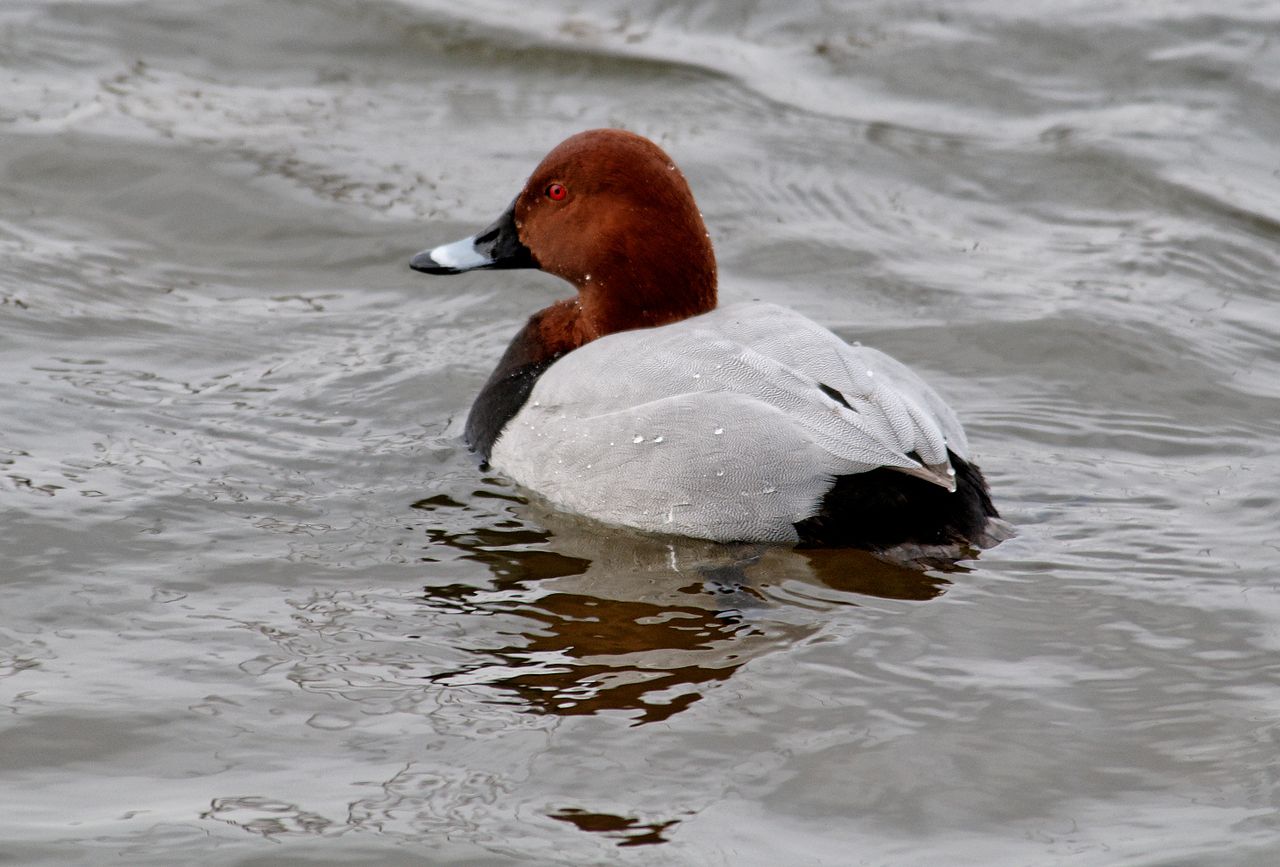
Stu has, for many years, had a special affection for the area around Salford Docks (Port of Manchester). In the late 1990s, He did a two-year research project on the large flocks of Pochard Aythya ferina and Tufted Duck A. fuligula that used to feed at the turning basin at Salford. Up to 3-4,000 diving ducks used to congregate at night on the docks and at Pomona – to feed on chironomids (bloodworms), Oligochaete worms and other pollution-tolerant invertebrates (Marsden & Bellamy 2000). When disturbed during the day, they would fly to quieter spots such as Chorlton Water Park and Rostherne Mere (Marsden 2000).


Pomona and surrounding development (Photo: Stu)
Large numbers of Pochard (above) and Tufted Duck used to feed at night at the docks (Photo: pyntofmyld)
Despite the site being one of the UK’s most important for Pochard, and by far Greater Manchester’s most important wildlife phenomenon, the ducks were forgotten, and the docks developed. Now, just a handful of diving ducks use the site due to increased disturbance levels from quayside developments, but more importantly due to improvements to water quality at the site. Ironically, while Pochard was doing well in the 1980s and 1990s making their loss no big deal, the species has just been uplisted to Globally Vulnerable according to the IUCN Red List. What a sorry state for the bird to be in – and it makes me wonder what if the redevelopment at Salford were taking place now? Would it be so easy to ignore such important numbers of a globally threatened bird species on the site? Probably.


Past Pomona

Now, almost the whole of Salford Docks/quays has been redeveloped. But one tiny portion remains undeveloped for the moment. Pomona Island is a patch of ‘Open Mosaic Habitat on Previously Developed Land’ to give it its proper title, an important mostly urban land use rich in biodiversity. Pomona island is a human-made island, bordering Pomona docks, the site where ship carrying Guiness and less important cargos unloaded from the Manchester Ship Canal’s opening in 1894 to its effective closure in 1982. 


The island has a long and important history – in the 1830s, it was home to the ‘Pomona Pleasure Gardens’, a playground for Manchester and Salford’s growing upper classes. Then in the 1860s, the 30,000 capacity Pomona Palace was added. This was a major venue for social events and political rallies – Benjamin Disraeli spoke to a vast crowd here in 1869. There is some wonderful information on the island’s history here and a great film about the place by George Haydock here.

Present Pomona


In the mid-eighteenth century, the Pomona Pleasure Gardens were a huge draw for the people of south Manchester who came in large numbers for fresh air, entertainment, and green space. Looking down on the site now, it is again an oasis, the only green space left among the sea of redevelopment. Walking around the island recently with James Walsh and staff from MMU really brought home the beauty of the place, along with its importance for wildlife.

Common spotted orchid Dactylorhiza fuchsia (Photo: S.Björn)
Around 150 plant species have so far been recorded at the site – including, of course, many introduced species, but also some interesting species such as Bee Orchid, and Northern Marsh and Common Spotted Orchids. A list of plants recorded is available online. The site looks to have excellent potential for butterflies and moths, and Bee numbers at Pomona are extremely high. Surveys of various faunal groups might throw up a few surprises. 
Above: Wheatear, a common Spring migrant on the island, Below: the Schedule 1 breeding Little Ringed Plover (Photos: James Walsh @MancunianBirder)

It is the site’s birds which are best known, mainly thanks to the efforts of James and a committed group of community ecologists. More than 125 species have so far been found at the site. These include lots of nice migrant records including Osprey, Jack Snipe, Whinchat, nine warbler species, and lots of spring Wheatears. But it is the bird species that are in general decline across the country that are most welcome at Pomona – Snipe, Lapwing, Skylark, Reed Bunting etc. The site houses 50 pairs of Sand Martins on the dock walls, and is also home to the Schedule 1 breeder, Little Ringed Plover. A current list of birds recorded is on James' blog.

Future Pomona


The island has, for many years, remained undeveloped. Now, however, it seems that just about the last green/brown space at the docks is to disappear. In November 2015,
the controversial Pomona Island plan was discussed at Trafford Town Hall (for live coverage from the meeting which reads more like commentary from a boxing match than a planning application debate see Todd Fitzgerald's piece. Like most bouts, there was only ever going to be one winner, and that was housing development - which has started already at the northeast of the site. Of course, the city needs homes, but the Salford Docks area has already worked very hard for the Northern Powerhouse, to the extent that the island is all that's left undeveloped.

There is such a strong recognition now that urban nature reserves are fantastically important - every swan and butterfly within them is so much more important than their rural cousins because they are experienced by so many people. Many cities around the world are reaping benefits from their mini-reserves - Toronto has the Humber Bay Park, Buenos Aires the fantastic Costanera Sur Ecological Reserve. These cities point the way towards where Pomona could have gone, and many believe it might be an opportunity lost. 

Save Pomona (Artwork: Liz Ackerley)

Perhaps most frustrating for us two Mancunians is that at almost the exact moment that the first bulldozers start work on our island, London opens the Woodberry Wetlands Reserve. Woodberry Wetlands is an urban nature haven, centred on an old reservoir in North London - just a little further from Arsenal's Emirates Stadium than Pomona is from Old Trafford. 

Alternative ideas for Pomona Island
 Pomona is, most believe, a lost opportunity to create a world class nature reserve/tourism attraction, but there are some who are optimistic that the situation can be turned around, and that the science, business and political communities can find a solution that is beneficial to wildlife. Protection of Sand Martin nesting walls, creation of green roofs and saving just a small area of habitat as a nature reserve would be a big victory for the environment and the people of Manchester, the European City Of Science 2016. 

References

Marsden, S. J. (2000). Impact of disturbance on waterfowl wintering in a UK dockland redevelopment area. Environmental Management 26: 207-213.
 

Marsden, S. J. & Bellamy, G. S. (2000). Microhabitat characteristics of feeding sites used by diving duck Aythya wintering on the grossly polluted Manchester Ship Canal, UK. Environmental Conservation 27: 278-283.

Friday, 15 April 2016

Philippines protected areas protecting?

Posted by Stu and Aldrin Mallari

In a paper published in the April issue of the journal Ambio, Aldrin Mallari, Nigel Collar, Phil McGowan and Stu look critically at placement and management of protected areas in the Philippines – and ask whether they are doing an effective job at delivering protection.


Aichi Target 11 of the Convention on Biological Diversity urges that nations protect at least 17% of their land, and that protection is effective and targets areas of importance for biodiversity. So, as well as covering a ‘reasonable’ proportion of a nation’s land surface, a quite hard-and-on-the-face-of-it-simple measure of a country’s commitment to conservation, the target also requires that

-    Those national parks etc are in the right places. We know that protected areas have a tendency to be placed in areas which don’t really need protection – ‘rock and Ice’ parks (Joppa & Pfaff 2009).
 

-    Protected areas do actually do their job in delivering protection to key wildlife – they are not ‘paper parks’ (e.g. Di Minin & Toivonen 2009).

Five years before reporting on Aichi targets is due, we assessed the Philippines’ current protected area system for biodiversity coverage, appropriateness of management regimes and capacity to deliver protection. Although protected estate already covers 11% of the Philippines’ land area, 64% of its Key Biodiversity Areas (KBAs) remain unprotected.


Mindanao bleeding-heart Gallicolumba crinigera is one of many lowland forest specialists in Philippines. This one was found in a snare 200 m from the HQ at Rajah Sikatuna National Park, Bohol (Photo: Stu).

We asked two broad questions of the Philippines protected areas network:

1. Are PAs appropriately positioned to protect areas of particular importance for biodiversity?

2. Are management systems in place and is there adequate capacity in the current protected area system to enable them to function effectively?


Puerto Princesa Puerto Princesa Subterranean River National Park in Palawan (Photo: Dave Lee)

The answer to the first question is, we believe, ‘No’.

While a good proportion of Philippines land area falls within protected areas, there is only a 36% overlap between established protected areas and KBAs (Key Biodiversity Areas – those with the most important species) meaning that 64% of key areas remain unprotected. This shortfall is particularly apparent in small islands like Siquijor (100% unprotected), the Sulus (98%), Batanes/Babuyanes and Greater Negros/Panay (both 75% unprotected).

When we look within a selection of protected areas, we find that there is a mismatch between what is needed to protect key species, and what the protected areas actually protect. The majority of threatened species in Philippines depend on lowland forest – of 40 IUCN threatened bird species, 33 are found only below 1,500 m a.s.l. while 29 are ‘highly forest dependent’. The proportion of strictly protected land that covers lowland primary forest is low – at best 30%, and in some cases none at all.


Mount Apo National Park on Mindanao - a beleaguered protected area due to pressure to convert forest to banana plantations and human habitation (Photo: Aldrin Mallari).

The answer to the second question is, again ‘No’.

Only around 17% of protected areas have a proper management plan and a protected area management board to guide their protection activities. Annual budgets to protect are pitiful in some cases – less than one US$10 per Sq Km in some parks (see Table below). Interestingly, in all five parks looked at, regular ‘BMS’ monitoring data were collected by park staff, but no analysis has been done on all these data.


Through the assistance of the German Government (through the Protected Area Management Effectiveness Project and other similar projects of GIZ) and the USAID (through B+WISER), the Philippines Department of Environment and Natural Resources (DENR) has started to recognise these mismatches and have taken bold moves to rectify the situation. 


Protected areas management planning (Photo: Aldrin Mallari).


The current list of protected areas are being rationalised, management plans are being revised, new and improved management systems are being set up, capacity of management authorities are being enhanced either by skills upgrade and/or additional budget allocations. The system of monitoring of protected areas are currently being improved by using simplified, state of the art, spatially sensitive, mobile technology to complement the existing BMS system. We are thrilled to see more of these positive changes in future, and hope to see continued bilateral support to DENR towards an expanded and more effective network of protected areas in the country!

Mentoring of wildlife patrol staff (Photo: Aldrin Mallari).

References

Di Minin, E. & Toivonen, T. (2009). Global Protected Area Expansion: Creating More than Paper Parks. Bioscience 65: 637-638.

Joppa, L.N. & Pfaff, A. (2009). High and Far: Biases in the Location of Protected Areas. PLOS One http://dx.doi.org/10.1371/journal.pone.0008273

Monday, 4 January 2016

Parrots International Symposium, and Intervales birds


 Posted by Stu


In November, I visited Brazil for the first time in more than ten years. My principal reason for the visit was to speak at the ninth Parrots International Symposium, in Campo Grande. Parrots International (PI) is a US-based NGO, founded by Marie and Mark Stafford, and devoted to welfare of both companion parrots and parrots in the wild. They are involved in funding and running a whole range of projects on wild parrots


A major activity of PI is the organisation of an annual parrot symposium, in 2015 held for the first time outside of USA. Simon Valle spoke at the PI symposium in 2013 about his Grey Parrot project on Principe – this time I was there to talk about our Grey Parrot work in general across several African countries. Also speaking were Neiva Guedes (Instituto Arara Azul), Pepe Tella (Estacion Biologica de Doñana), Tom White (USFWS), Indira Lacerna-Widman (Katala Foundation), and Thomas Arndt (Funds for Endangered Parrots). 


A pair of Blue-and-yellow Macaws Ara ararauna on streetlights in Campo Grande (Photo: Peter Widman)
Urban Blue-and-yellow Macaw (Photo: Steve Brookes www.wildparrotsupclose.com)
  
Campo Grande is an amazing city, stuffed with wildlife. There were Agoutis and Bare-faced Curassows by the side of the road, and Blue-and-yellow Macaws hanging off the lamp posts. After the conference, I went with Pedro Develey from SAVE Brasil, the Brazilian BirdLife partner, to help organise a new project on birds in Minas Gerais. More on this soon.
 
Southern Red-shouldered Macaws Diopsittaca cumanensis also live 'comfortably' in Campo Grande (Photo: Steve Brookes www.wildparrotsupclose.com)


Blue-and-yellow Macaw pair at nest in dead palm (Photo: Steve Brookes www.wildparrotsupclose.com)

(Photo: Steve Brookes www.wildparrotsupclose.com)

My final stop was Intervales State Park, around five hours bus and taxi ride from Sao Paulo. I visited this place with Mauro Galetti from UNESP many years ago. Then we stayed at one of the guard/research posts in the lowlands of the park – I’m not sure where we were but I do remember seeing Jacutinga and some other lowland Atlantic Forest goodies. This time I was at the main complex accessed from Ribeirão Grande. This is a stunning place for birding – three nights at Pousada Esquilo, mountains of food and the superb Faustino to guide cost around £120.


Above: Great forest at Intervales State Park (Photo: Stu); Below: the Near-threatened White-breasted Tapaculo (Photo: Dario Sanches).

We saw lots of birds including some like Spot-winged Wood-quail, Hooded Berryeater, and Atlantic Forest Royal Flycatcher which I’ve not seen for years, plus some great new birds including Such’s and Short-tailed Antthrushes, Variegated Antpitta, White-breasted Tapaculo and Rusty-breasted Nunlet. I also finally saw the bamboo-loving Temminck’s Seedeater, and there is even an area where they put out corn for the lovely Red-and-white Crake.

Above: Red-and-white Crake comes to corn at the marsh by the Administration, along with Blackish Rail (Photo: Francesco Veronesi); Below: Atlantic forest from my room at Pousada Esquilo (Photo: Stu).

Thursday, 17 December 2015

‘Growing’ new habitat to predict the future for key species

Posted by Matt Geary and Stu

Accurate predictions of the impacts of future land use change on species of conservation
concern can help to inform policy-makers and improve conservation measures. In a new paper just published in PLOS One, we introduce a method, based on open source software, which integrates habitat suitability modelling with scenario-building. We illustrate its use by investigating the effects of alternative land use change scenarios on landscape suitability for black grouse Tetrao tetrix in the Scottish uplands.


Likely changes in the uplands

The first step was to build a habitat suitability model for the species, in this case using the well-used MaxEnt. This gave a standard map of suitability for pixels across the 800 sq km landscape in Perthshire. We wanted to simulate how the upland area might change over the next 20 years so we asked upland experts how they thought the landscape might change – they told us  that most likely were changes from moorland and grazed land to open canopy forestry due to native forestry planting schemes and grazed land to moorland via a reduction in grazing.


A moorland and open woodland mix in Perthshire - a potential result of the reduced grazing scenario which resulted in beneficial landscapes for black grouse (Photo: Matt Geary).

Growing patches of new habitat

To represent how these changes in land use would affect the area, we grew patches of new habitat within the existing landscape (e.g. new patches of open woodland where moorland currently exist). We grew the new patches using a piece of old script in Mathematica supplied by Ed Harris here at MMU, which was updated to work in R and embedded into our model. For each scenario, the cover of different land use types was altered by 5–30% from 20 random starting locations – this enabled us to look at how the amount of new habitat and its spatial positioning of the new land uses might affect their impact on the grouse. We then ran the MaxEnt again with the 20 new landscapes and assessed changes in suitability – much like people do with climate change scenarios and their effects on species ranges.


Effects of land use changes

The scenario where grazed land was replaced by moorland and open forestry was the most beneficial for black grouse, and ‘increased grazing’ (the opposite conversion) the most detrimental. Positioning of new land use blocks was shown to be very important. So it is not just a case of a certain benefit or loss brought about by a certain amount habitat change - where those habitat changes occurred was also very important. This might be helpful to local land use planners and habitat managers – habitats could be placed so as to maximise benefits for a key species, or at least to minimise their detrimental effects.


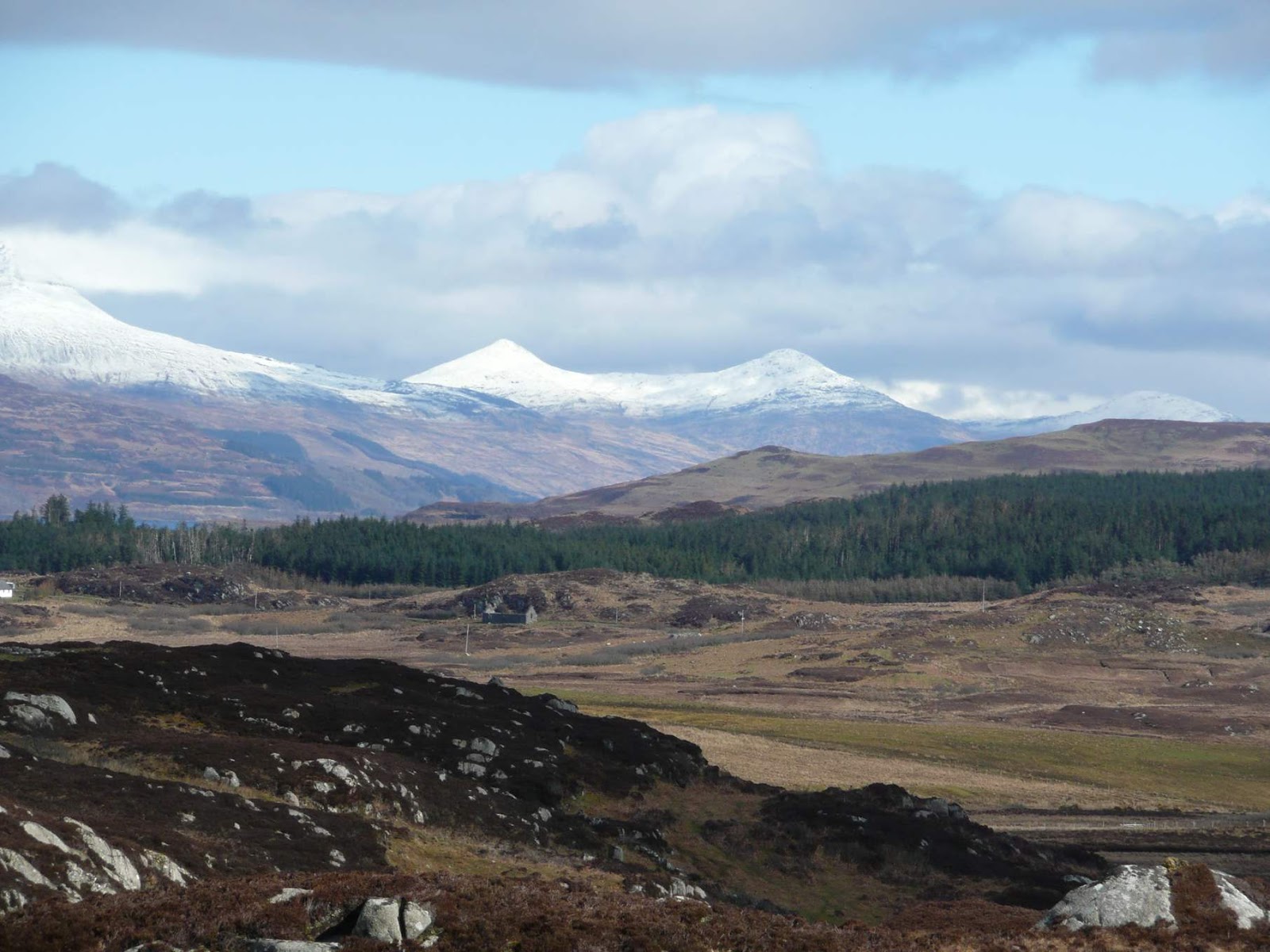
An 'upland' mosaic: Ross of Mull looking across Scoor forest towards Ben Mor (Photo: Alan Fielding).

Another important finding was that, while increasing the area of open canopy forestry caused a proportional decrease in suitability, suitability gains for the ‘reduced grazing’ scenario were nonlinear. Reducing grazing slightly to create small additional amounts of moor and open canopy woodland had small benefits to grouse, but reducing it by 20% had disproportionately large benefits in terms of habitat suitability for the species. Again, this kind of result might help inform local land management and even regional policy such as grant schemes promoting land use changes.

This ‘Scenario-led’ landscape simulation modelling can be applied in assessments of the impacts of land use change both on individual species but also on diversity and community measures, or ecosystem services. A next step would be to include landscape configuration more explicitly in the simulation models, both to make them more realistic, and to examine the effects of habitat placement more thoroughly. 

Matt's PhD was funded by Manchester Metropolitan University and the World Pheasant Association. Matt is now a lecturer in Conservation Biology and Animal Behaviour at the University of Chester. Contact him at M.Geary@Chester.ac.uk. More information about his research is at http://mattgeary.github.com.